OUFFF — late-night burger and shawarma venue, Berawa, Canggu, Bali. An indoor room and a semi-outdoor street-food area, open from daytime to roughly 5am. Role: TAS.AC — sound system design, equipment specification, install and tuning. OUFFF is TAS.AC’s own venue. Key figures: whole system hidden above an acoustically-transparent ceiling · 0 visible sources · one TAS 4×350 amplifier carrying DSP and matrix · DJ and Bluetooth · day / evening / party presets. Status: completed, 2026.
OUFFF sells burgers and shawarma late into the night. It also sells music. The brief treated sound as part of the product.
What did OUFFF need?
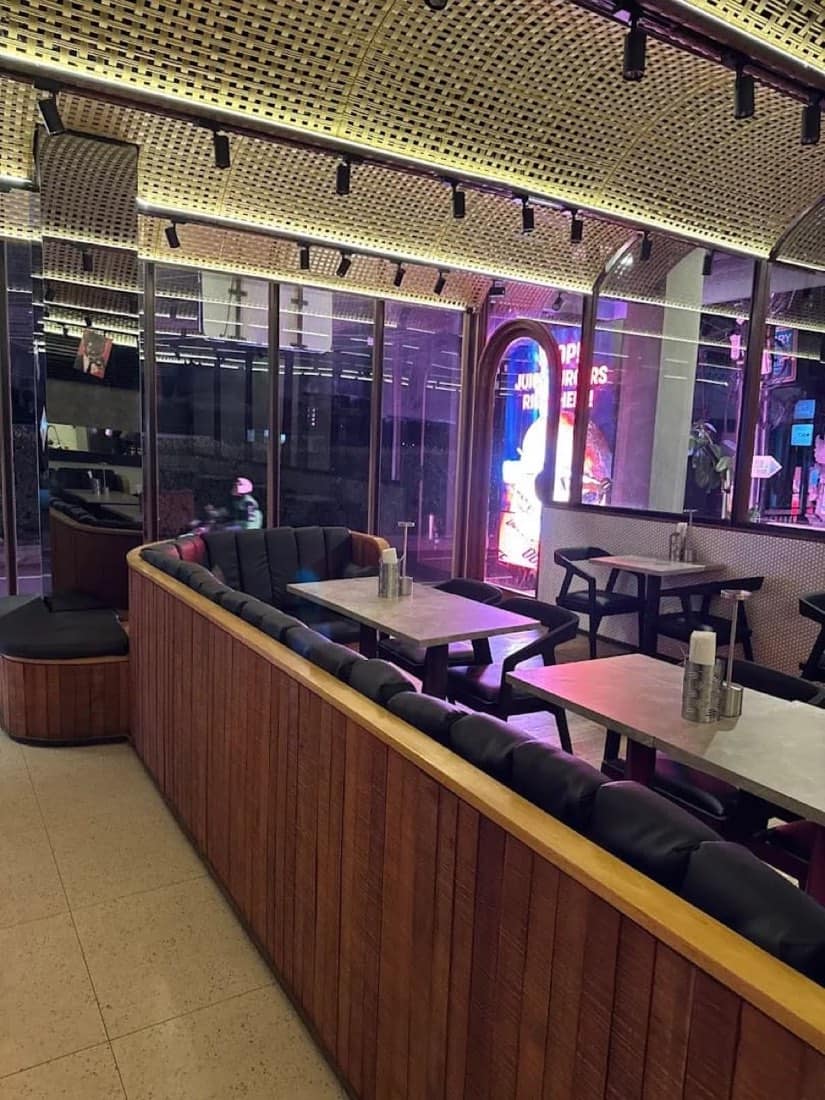
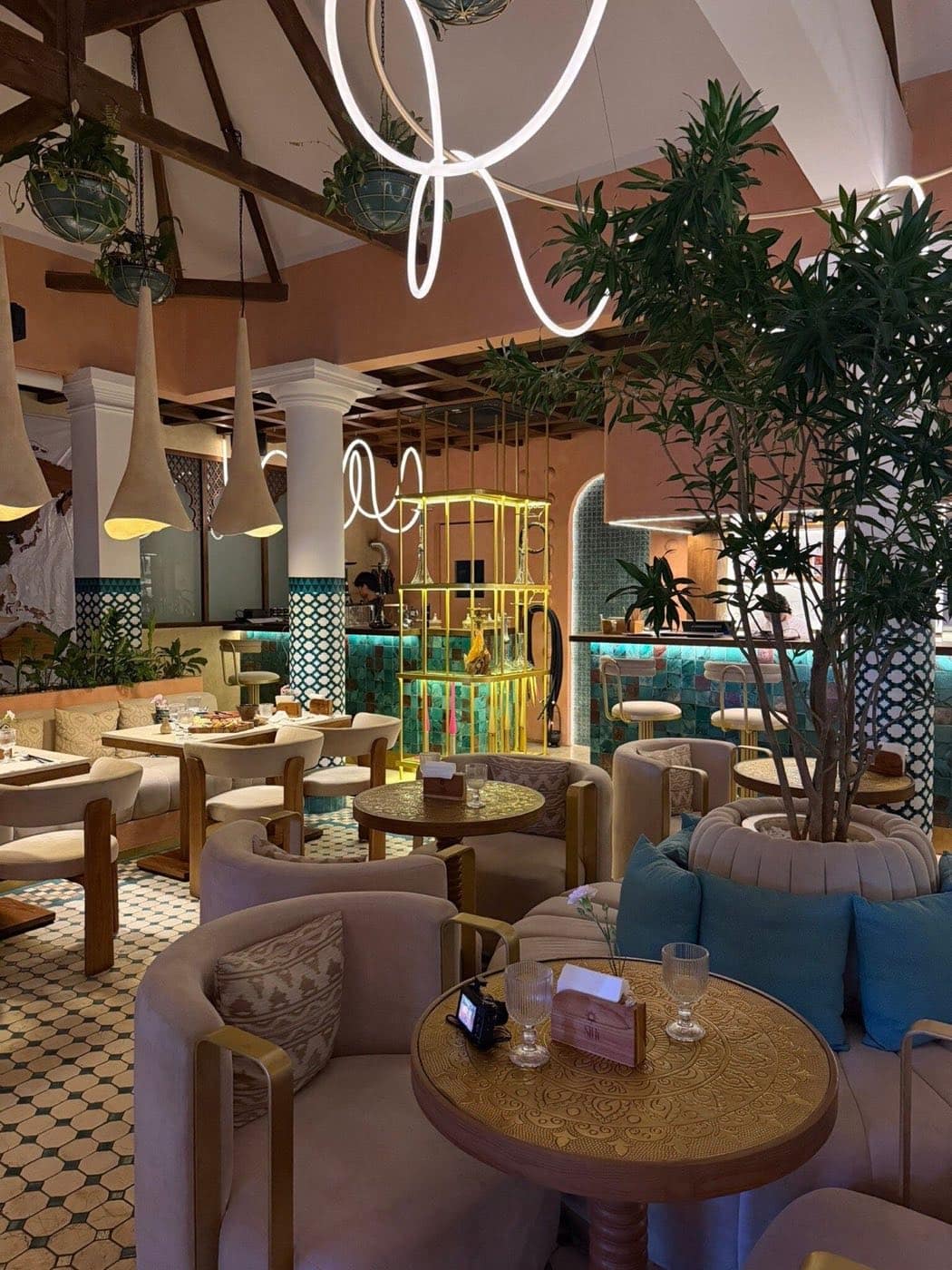
The venue runs two zones: an indoor room and a semi-outdoor street-food area. It opens in daylight and closes near 5am, so the sound has to hold across that whole span. It also had to disappear. The owner wanted music everywhere and speakers nowhere.
An invisible install: OUFFF’s whole system above the ceiling
The entire system hides above an acoustically-transparent ceiling. Sound passes through; the eye does not. The ceiling reads as a ceiling, and the music has no visible source.
A TAS S212B subwoofer — two 12-inch drivers in one cabinet — carries the low end. Two TAS MR341 column tops cover the room.
The semi-outdoor area gets its own speaker, a weather-capable TAS MR363. Open air and daytime heat would age an indoor unit fast, so this one is built for the exposure.
One amp runs OUFFF — TAS 4×350 with DSP and matrix
One box runs the room. A TAS 4×350 amplifier drives four channels at 350 W, with DSP and matrix built in.
The DSP tunes the sound to the space: EQ set to the actual room, not a factory curve.
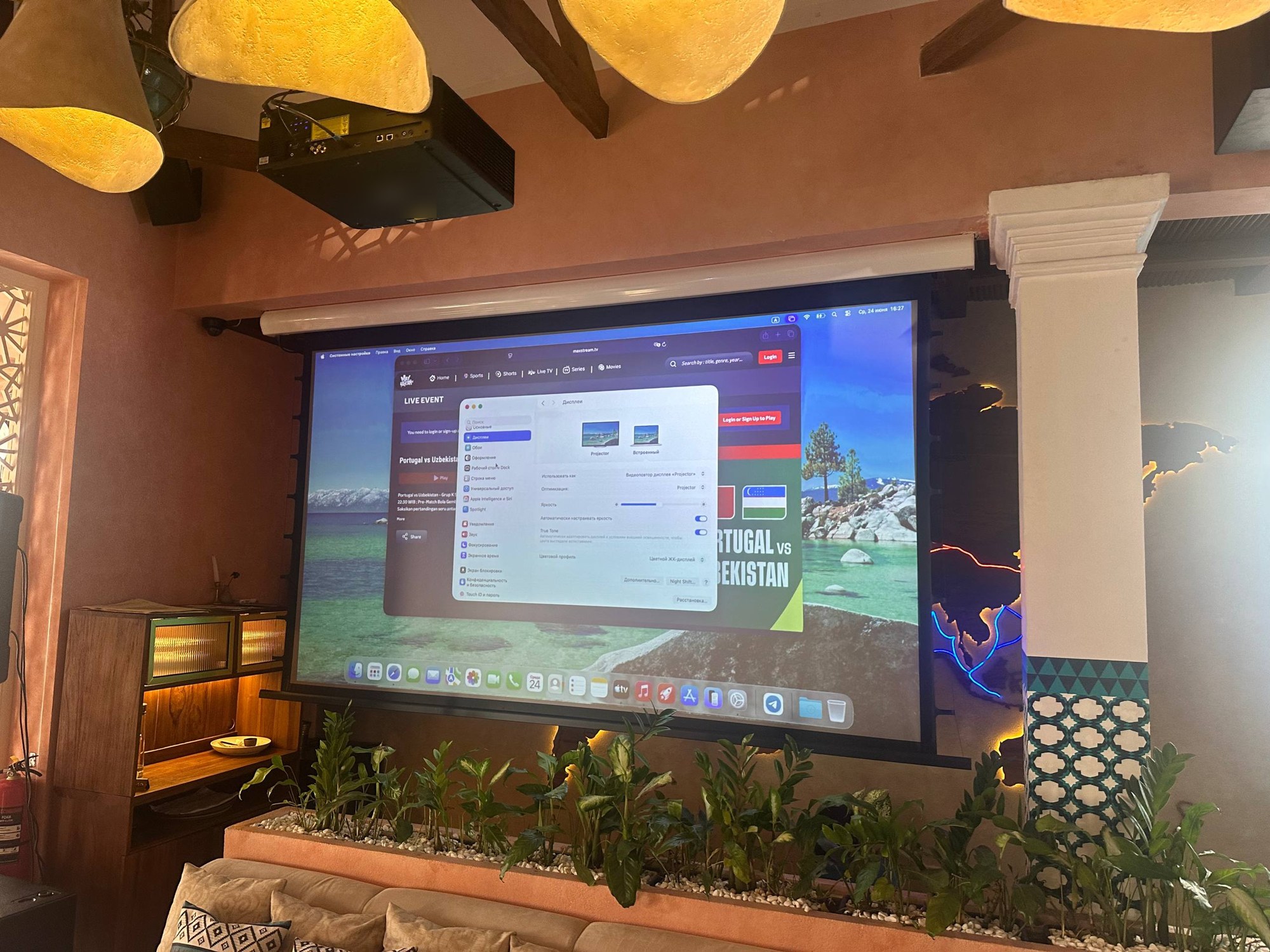
The matrix handles the sources. A visiting DJ plugs into a stereo XLR feed. A Bluetooth receiver covers everything else. Switching is automatic: the DJ plays, or Bluetooth plays, and staff touch nothing.
Three presets shift the balance by the hour. Day sits low and even. Evening opens it up. Party is the loudest of the three, with a slight bass lift.
Why resort engineering at burger scale?
A hidden system asks for more engineering than a visible one, not less. You cannot nudge a speaker you have buried above a ceiling, so selection, placement and EQ have to be right before it closes. Room correction, seamless routing and time-of-night presets are the same tools TAS.AC uses on multi-villa complexes; only the scale changes.
The system — reference
| Zone / role | Equipment | Notes |
|---|---|---|
| Indoor — low end | TAS S212B (2×12″) | Hidden above the ceiling |
| Indoor — tops | 2× TAS MR341 | Hidden above the ceiling |
| Semi-outdoor | 1× TAS MR363 | Weather-capable |
| Amplifier | TAS 4×350 (4 × 350 W) | DSP and matrix built in |
| Sources | DJ stereo feed (2× XLR) + Bluetooth receiver | Seamless matrix routing |
| Presets | Day / evening / party | Party adds a slight bass lift |
What does a system like this cost?
Cost moves with the DSP-and-matrix amplifier over plain power, the hidden ceiling install and the tuning behind it, a weather-capable outdoor speaker, and the source routing. There is no catalog price. How TAS.AC prices this work is on /pricing/.
The result at OUFFF
The system is completed and in daily use, from daytime service through to close near 5am. TAS.AC publishes no measured figures for OUFFF. Guests hear music in every corner and find no speaker to look at. Music reads as part of the product.