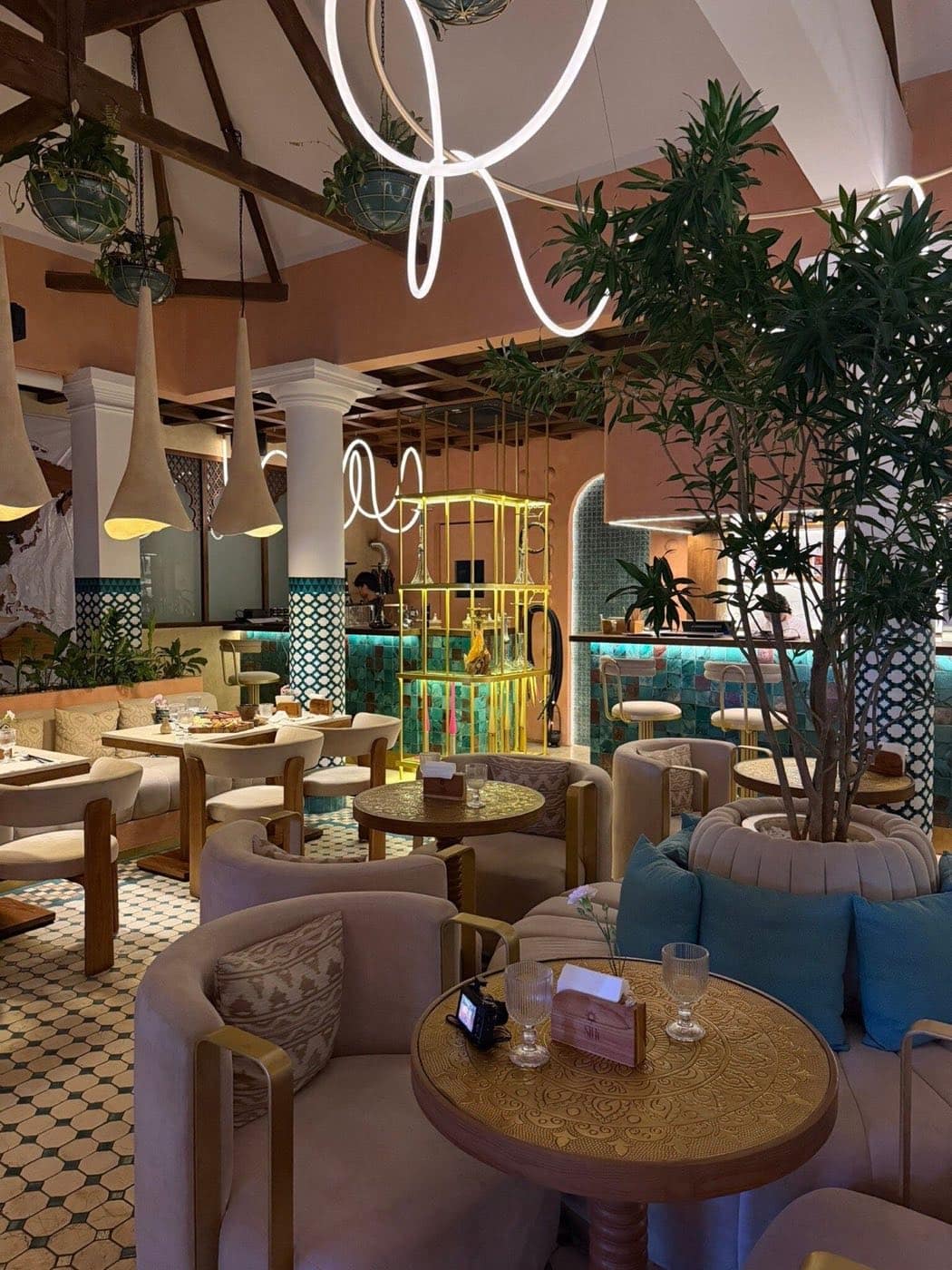
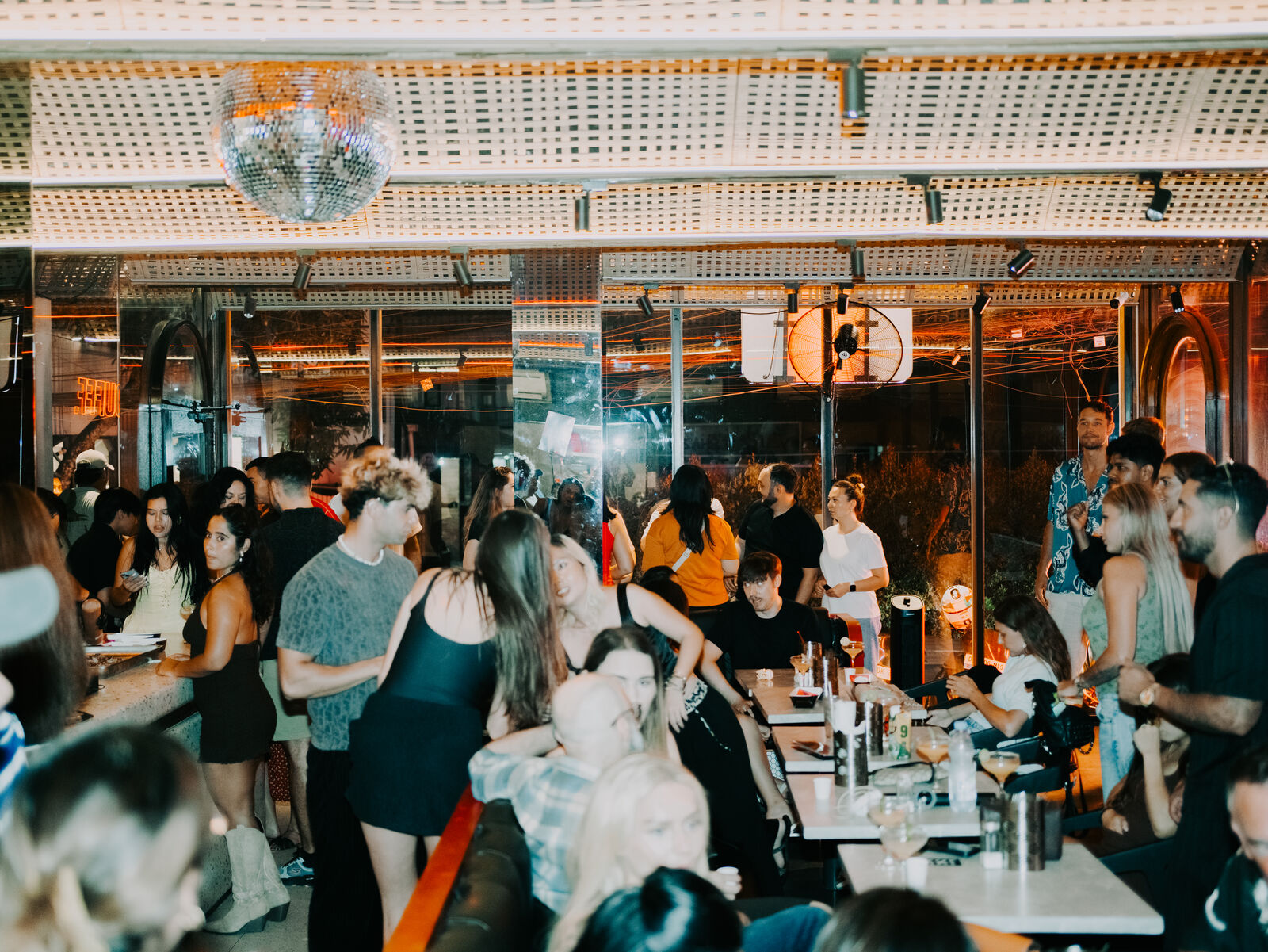
SILK Restaurant — oriental grill & shisha lounge, Jl. Subak Canggu, Canggu, Bali. A 104-inch daylight projection over the dining room, with the projector mounted among the ceiling’s fabric chandeliers. Role: TAS.AC — projection design, equipment specification, installation, calibration, staff training. Key figures: 7,000-lumen (ISO) laser DLP · 0.48:1 short-throw lens, 1,100 mm from the wall · Black Crystal ALR screen, 0.8 gain, 2300 × 1290 mm canvas · 2 recalibrations by staff, from the floor. Status: operating since January 2026.
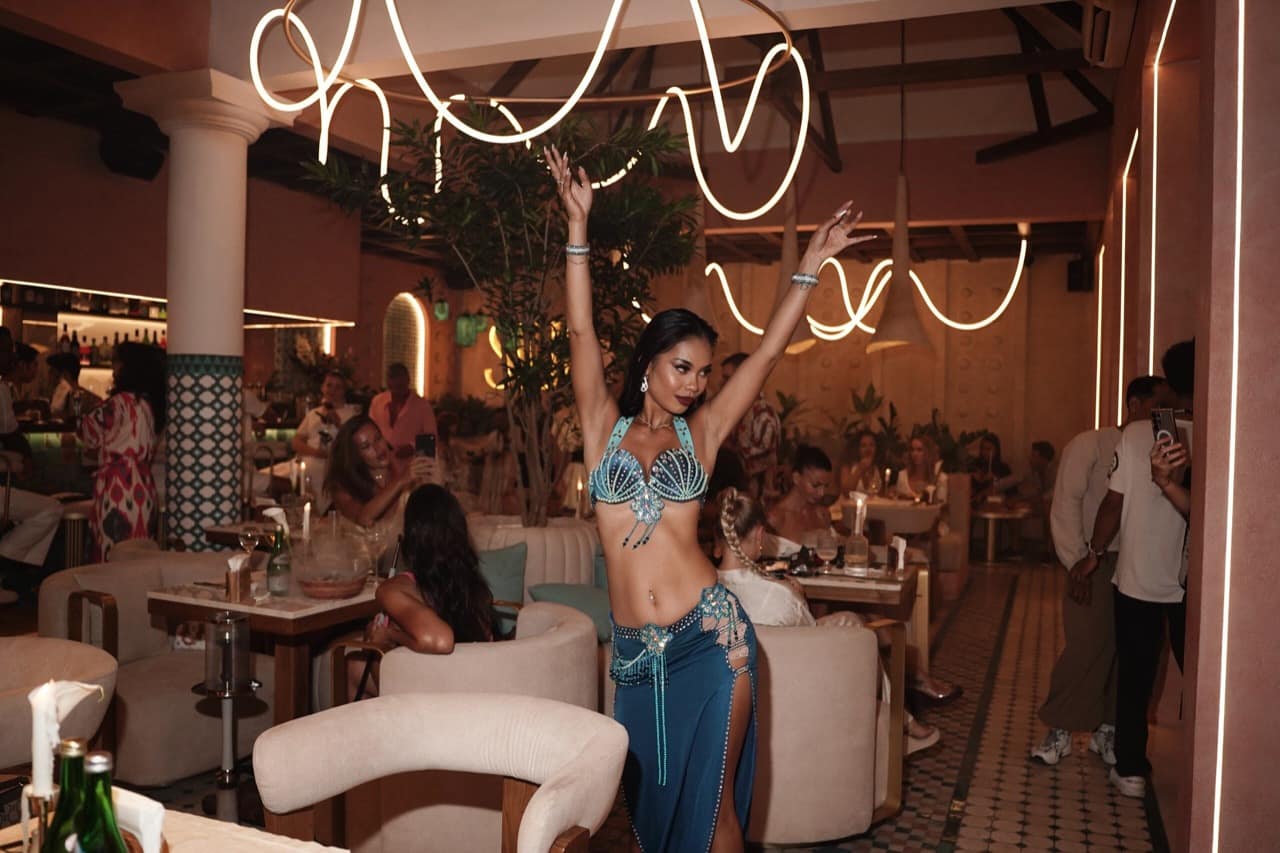
The ceiling at SILK is the point. Yellow fabric chandeliers hang in rows over the dining room of this oriental grill and shisha lounge in Canggu. They carry the room’s whole character. The projection design inherited one awkward constraint from the first sketch: the only honest position for the projector is inside that ceiling — among the chandeliers, where they touch it.
The chandeliers were never going to move
The lens decides where the projector hangs at SILK. On this projector’s standard 1.22–1.53 optics, a 2300 mm wide image puts the unit 2.8 to 3.5 m out from the wall — deep in the chandelier field, with a long light path through the air of a working shisha lounge. The optional 0.48:1 short-throw lens pulls it to 1,100 mm from the wall, at the edge of the field, the beam dropping 1290 mm to the foot of the canvas.
Contact still happens there. TAS.AC designed for the collision: the mount is fixed, and nothing about the picture depends on it staying untouched.
What happens when a chandelier knocks the projector?
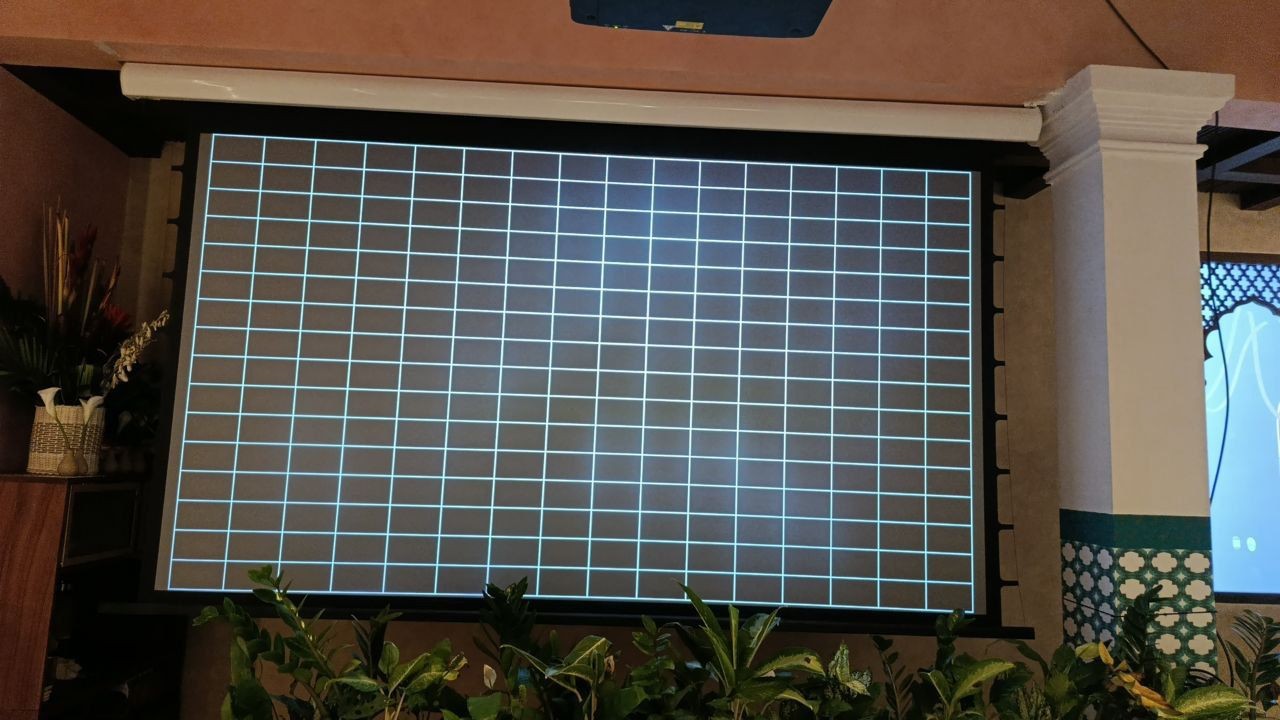
Staff square the picture from the floor, by remote. The projector at SILK Restaurant carries a motorized lens and 4-corner geometric correction: a knocked housing means dragging the image corners back onto the screen edges, not raising a ladder among the chandeliers mid-service. It has happened twice since the system went live in January 2026; SILK’s own staff did both recalibrations.
Can a projector hold a picture in daylight?
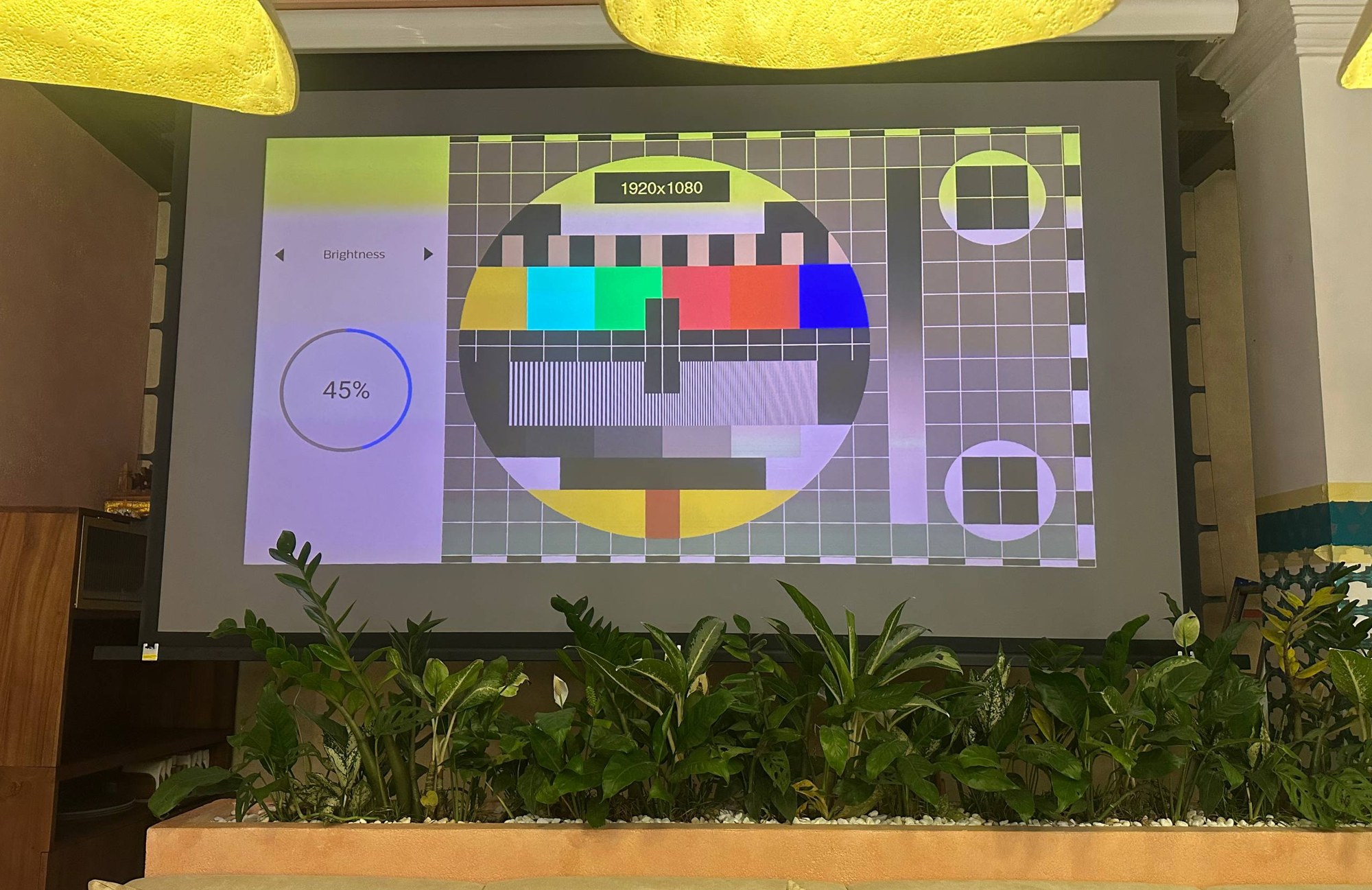
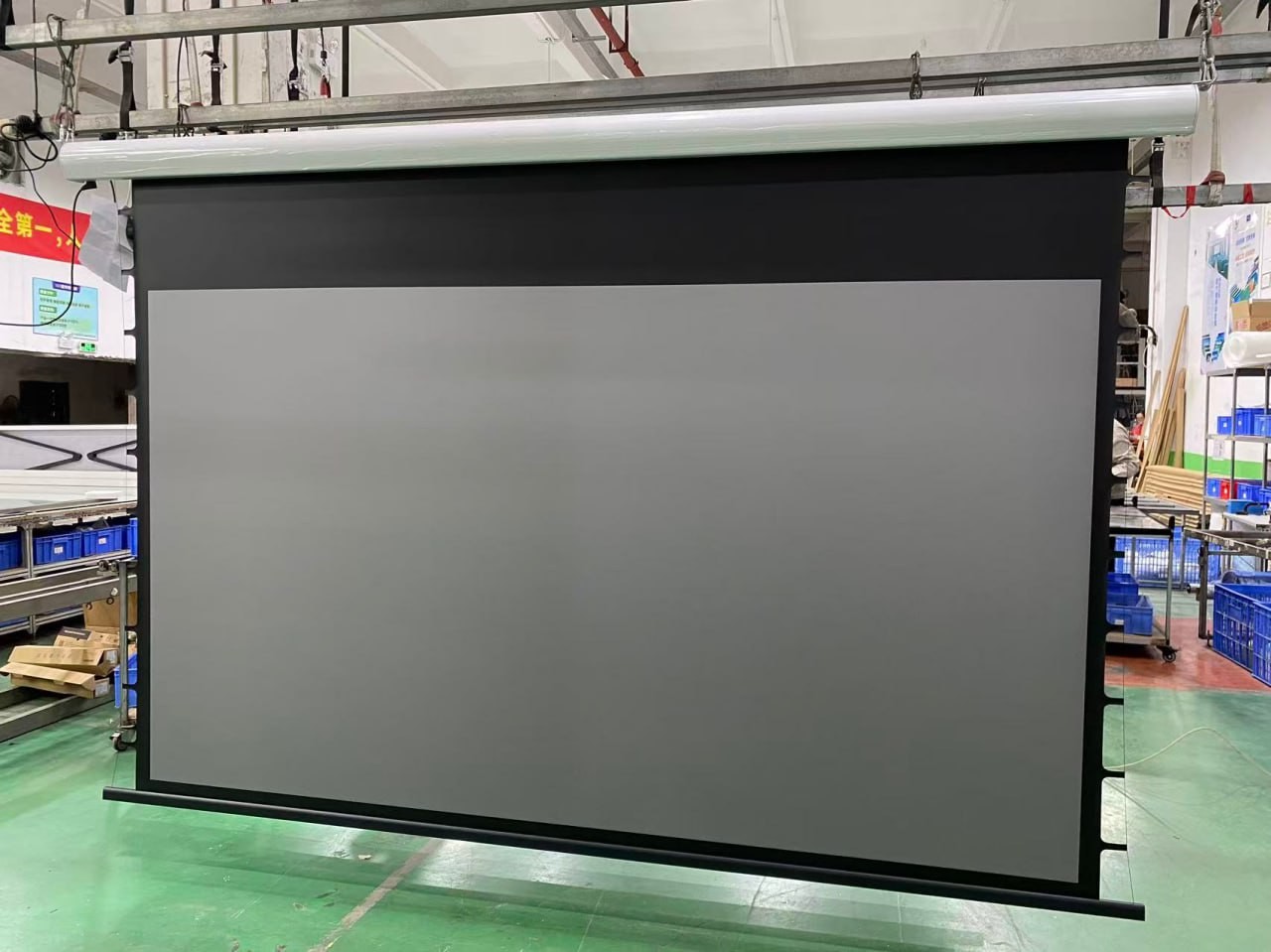
At SILK it holds because the arithmetic was done before the order was placed. A 7,000-lumen (ISO) laser DLP projector fills the 2300 × 1290 mm canvas — 104 inches of 16:9 — onto grey Black Crystal ALR fabric at 0.8 gain. The screen returns less peak brightness than white fabric and rejects ambient light in exchange; that contrast is what survives the afternoon.
Wireless HDMI puts any laptop on the SILK screen
Content arrives over wireless HDMI: a USB-C transmitter dongle in any laptop, the receiver at the projector. A guest presentation, live sport or the house playlist goes on screen with no cable crossing the dining room.
The system — reference
| Component | Specification | Why it matters |
|---|---|---|
| Projector | 7,000-lumen (ISO) laser DLP, 1920 × 1200 | Brightness budget that pays for the ALR trade |
| Lens | 0.48:1 fixed short-throw, electric shift | Projector 1,100 mm from the wall, edge of the chandelier field |
| Correction | Motorized lens + 4-corner geometric, by remote | Realignment from the floor; staff-serviceable |
| Screen | Motorized tab-tensioned, Black Crystal ALR, gain 0.8 | Rejects ambient light; retracts flush when idle |
| Canvas | 2300 × 1290 mm (104″, 16:9), 2776 mm housing, 540 mm black drop | Picture lands at sightline, clear of the housing |
| Light source | Laser, 20,000 h Normal / 25,000 h Eco | No lamp changes for a daily-operating venue |
| Signal | Wireless HDMI over USB-C dongle; HDMI 2.0 input | Any laptop on screen, no cable across the room |
What does daylight projection cost?
The number moves with the brightness budget, the ALR screen size and type, and the lens that sets where the projector can hang. No catalog price applies; how TAS.AC prices this work is at /pricing/.
Status at SILK
The system has been operating since January 2026 and carries a two-year TAS.AC warranty. The two recalibrations are operational fact; neither needed a service call. On-screen brightness figures on this page are the equipment specification, not site measurements.