For Developers & Owner’s Reps

A line in your RAB.
Frozen before the walls close.

Your QS already budgets FF&E per key. Low-voltage belongs on the same sheet — network, audio, CCTV, control as one contract, with the BoQ, exclusions and GC dependencies locked before the first cable is pulled. The figure you approve is the figure you pay. That sentence is the product; everything below is how we make it true.

01 / Why Now

Low-voltage surfaces last —
and blows up budgets first.

01

Scope creep lands at handover.

Without a frozen BoQ, every AV/IT change request becomes a negotiation at the worst possible moment — when you’re racing to open. Post-construction integration typically costs several times more in rework alone: conduit, power and structural provisions had to happen during the build, and didn’t.
02

Five vendors, zero accountability.

Audio, network, CCTV, control, lighting — split them and the joints between contracts become your problem. We take the whole low-voltage scope under one contract, so a failure at any joint is ours to fix.

03

Compliance belongs in the drawings.

The PDP Law (UU 27/2022) requires compliant CCTV with real data handling — fines reach 2% of annual revenue. Noise rules are enforced at the property line: 70 dB, 55 dB near residential. Both are cheap in the drawings and expensive after the ceilings close.

Timing

Where we enter
your Gantt chart.

Concept / DED

— the cheap moment. Zones, racks and risers land on the drawings; changing them costs a revision, not a rework.

MEP finalization

— the right moment. Conduit, power and cable routes get into the MEP set before it’s issued for construction. This is where most projects call us, and it still works.

Construction, walls open

— the last good moment. We can still coordinate routes with your GC before ceilings and shafts close.

After handover

— the expensive moment. We’ll still do it. You won’t enjoy the invoice.

03 / In your units

Priced the way
you already budget.

Nobody budgets “a sound system.” You budget per key, per cover, per zone — so that’s how we publish. Boutique hotels price per key; restaurants per cover; beach clubs per zone, because a 200-person pool deck and a locker corridor are different problems that happen to share an address. The full ranges, with the drivers that move you inside them, are on the pricing page.

04 / What you get

Six documents.
Built to be forwarded.

A Scope Freeze produces a folder your QS can work from without a single call to us. New build or renovation, the mechanics are the same.

01

Locked BoQ — line-item specs with alternatives. Named brands, not “premium speaker, qty 12.”

02

Exclusions & assumptions — what’s not in the number, stated before you sign.

03

Integration map — network, audio, video, security, control on one schema, with the responsibility line between us and the electrician drawn on it.

04

Cable routes & conduit requirements for the GC — what has to be in the wall before it closes.

05

Timeline & dependency checklist — what’s needed from the GC and when, mapped to your build stages.

06

Budget by tier — Good / Better / Best. You choose the level; the BoQ prices it.

The documentation is yours, paid for once. If you tender the build to someone else, the design still works — any competent contractor can execute from it. We’d rather win the build on the strength of the drawings than on your inability to leave.

05 / From range to number

What “fixed”
actually means here.

01

The design phase is a fixed fee, quoted up front and credited against the build if you proceed. It produces the BoQ — every zone, every unit, every cable run, priced once.

02

The BoQ is the contract. The figure you approve is the figure you pay. Nothing in the drivers is designed to jump you past it by surprise.

03

Changes arrive as paper. If site conditions force a change, it’s a written change order you sign before it costs anything.

04

Handover is documented. As-built drawings, commissioning reports, staff training — delivered on your timeline, because an AV/IT delay is an opening delay. The install carries a two-year TAS.AC warranty.

Case in point

Designed before construction.
85 units.

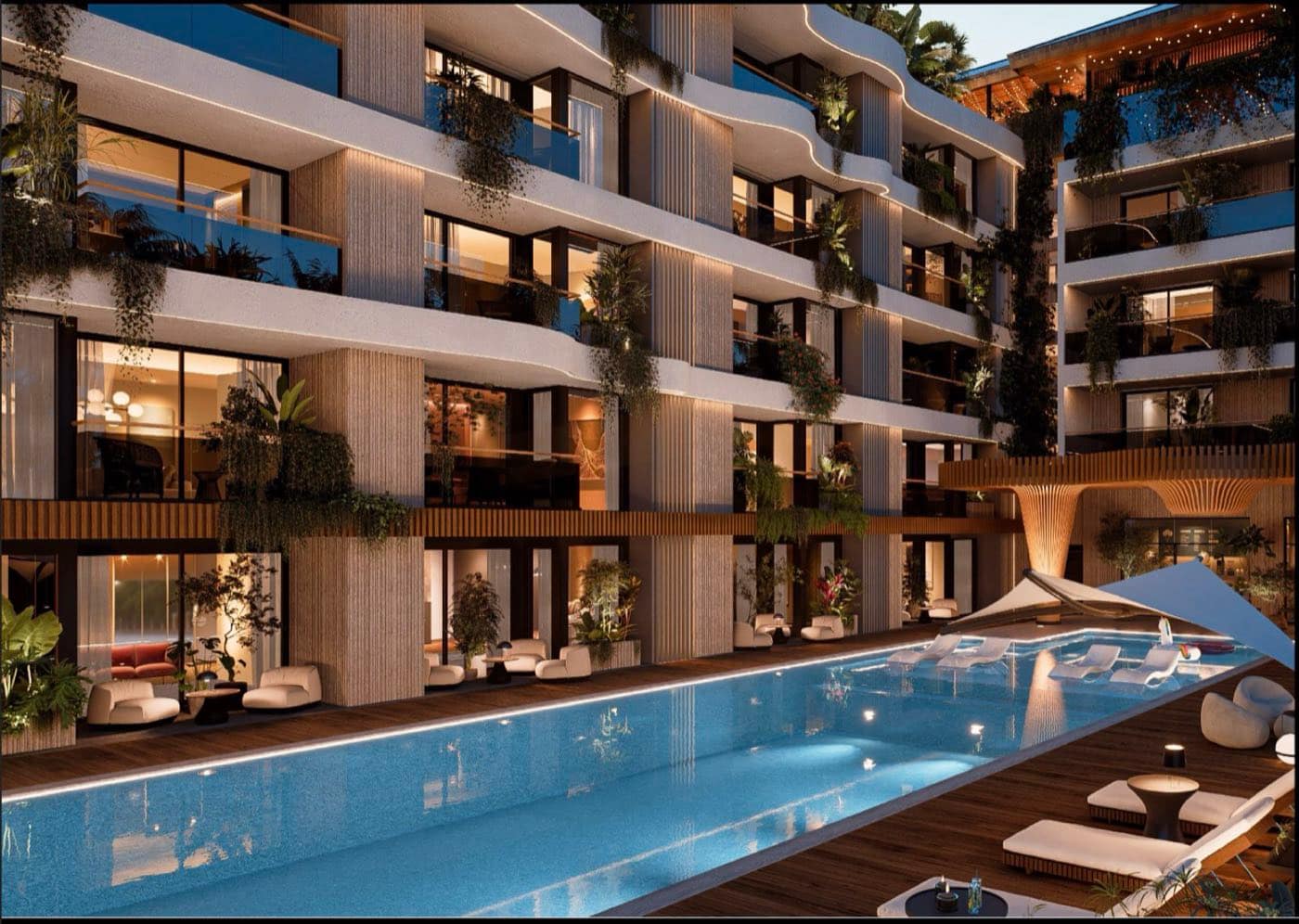
PGD Aparthotel, Berawa — five floors, 6,800 m², 85 units, developed by PGD (Premier Global Development). We were on the project before the walls went up — alongside SHOVK Studio (Kyiv) and 19 Buro / AV19 Bureau (Bali).

Eleven audio zones, cable routes, amplifier rooms and zone boundaries went onto the architectural drawings, not onto a punch list after handover. Conduit and back-boxes placed correctly the first time; amp heat and noise kept away from guest spaces; coverage calculated against real room geometry instead of fought against a finished ceiling.

The property is in construction, planned launch Q4 2026 — so these figures are design intent, not measured results. That’s the honest version. It’s also the point: the scope was frozen while it was still lines on a drawing.

Read the PGD case →

Family Nest in Uluwatu runs 34 villas and four venues on one fiber backbone under a single low-voltage contract. The developer came back to us for Phase 2 on the same backbone. It started the same way: as a locked line in someone’s budget.

FAQ

Questions from developers.

We’ll figure out AV after construction.
That’s when it gets expensive. Conduit, power and structural provisions have to happen during the build; post-construction integration typically runs several times more in rework alone. The cheap version of this project only exists before the walls close.
We have a main contractor who handles everything.
We often work under GCs — one contract to them, our scope passed through. Your procurement stays simple; the low-voltage work still gets specialist engineering instead of being the electrician’s side quest.
The timeline is too tight for a design phase.
A Scope Freeze typically takes 1–2 weeks. Skipping it doesn’t save that time — it moves it to the change-order stage, with interest. Send us the critical path and we’ll tell you honestly whether it fits.
We’re 14 months from opening. Too early to talk?
It’s exactly when to talk. The RAB is being written now; a line that isn’t in it doesn’t get tendered later. A design-phase engagement now means your QS carries a real number instead of an allowance — and you’re not negotiating low-voltage during fit-out.
What if we want to switch integrators mid-project — or you disappear?
The documentation is yours from day one: schematics, configurations, passwords. Any competent integrator can continue from our drawings — nothing is proprietary-locked.

Lock the scope
before you break ground.

Send the stage and the scope. We’ll tell you what belongs in the RAB, what the Scope Freeze covers, and what it costs — in writing, in your units. No charge to find out.