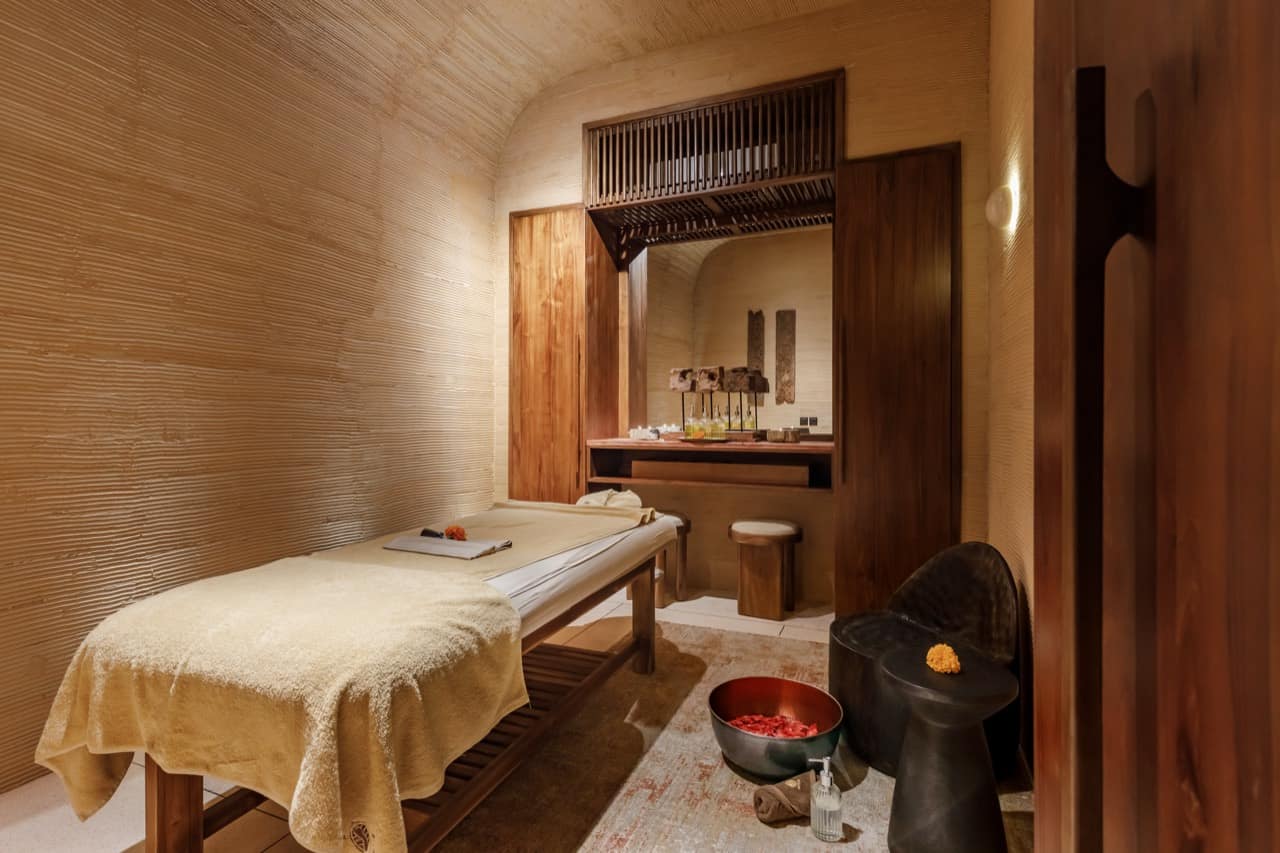
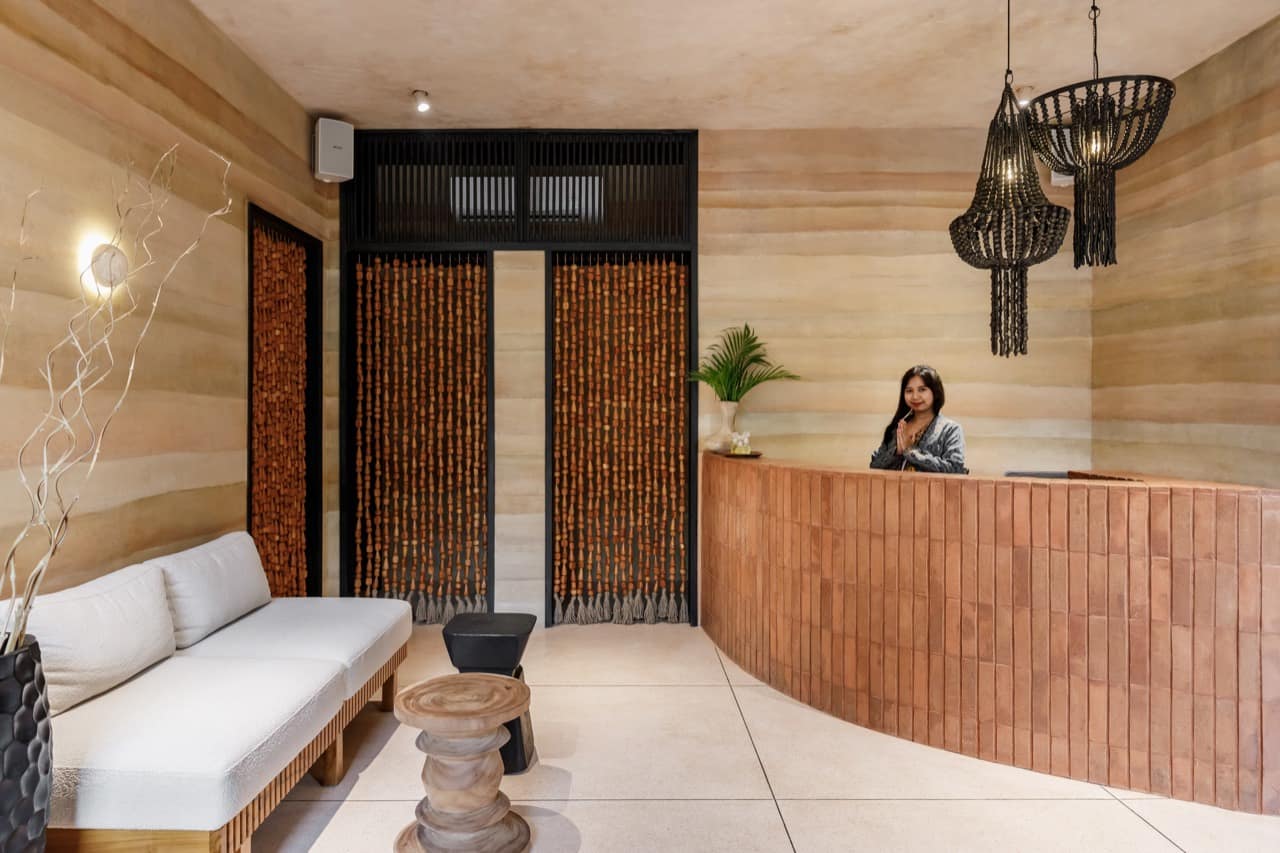
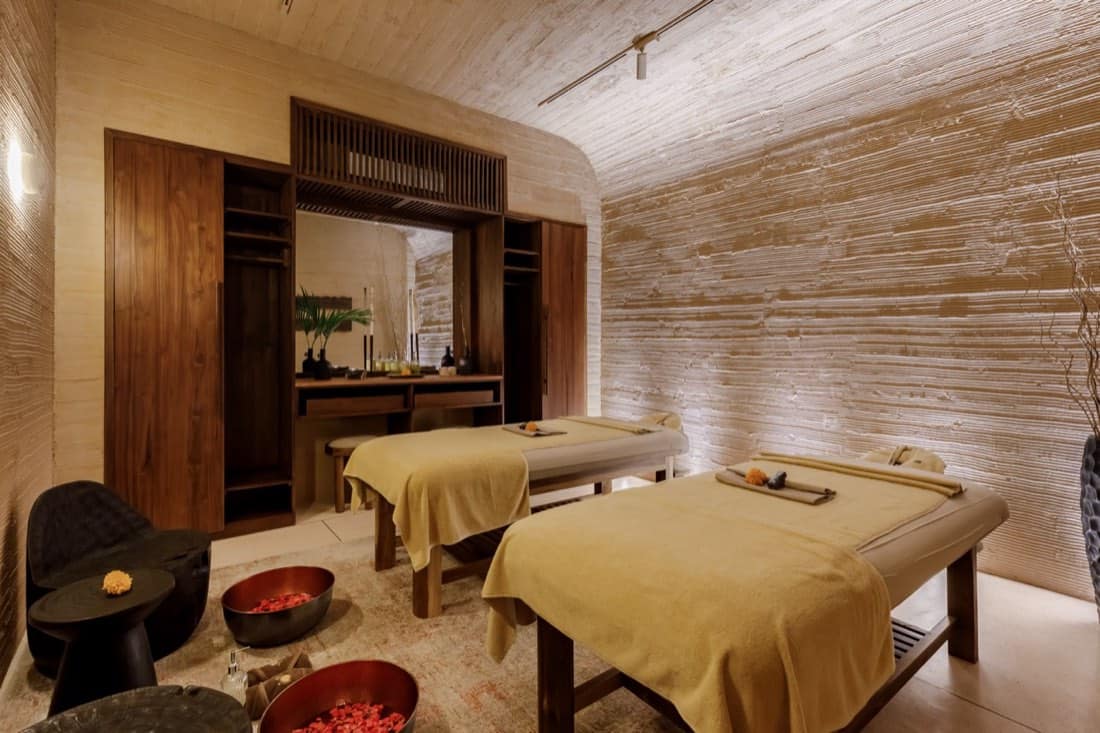
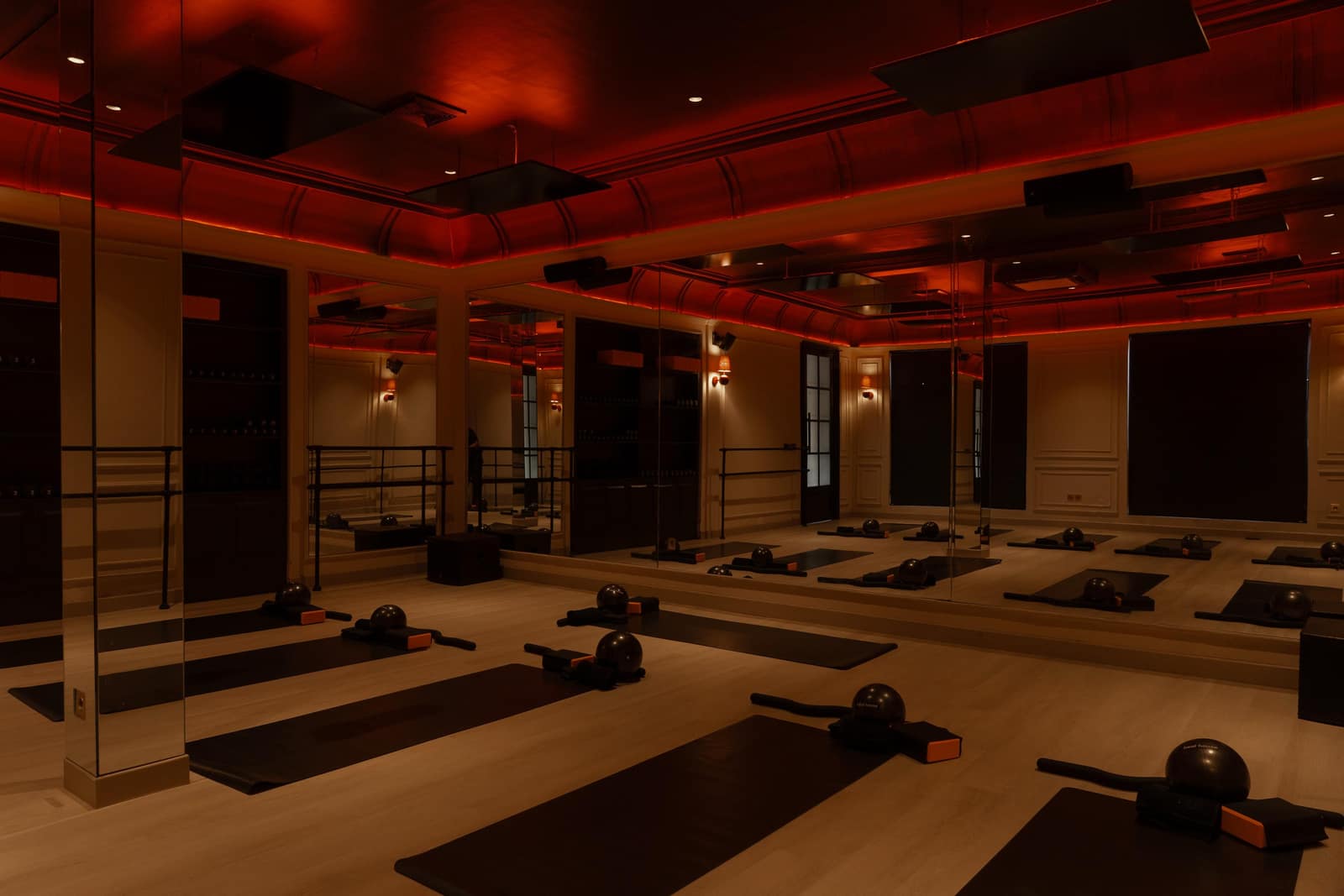
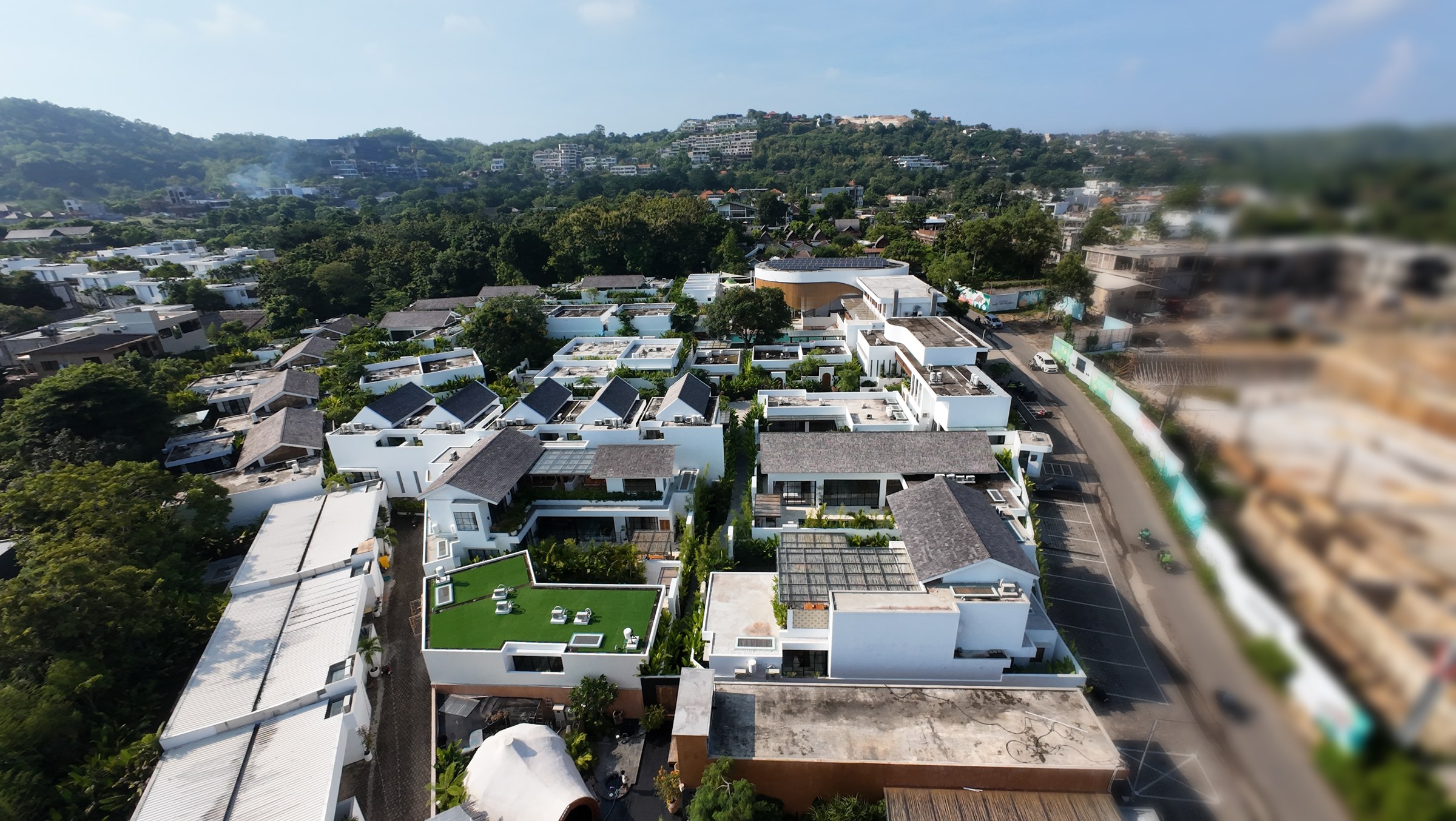
ATMOS Social Steam Club — wellness venue at Family Nest, Pecatu, Uluwatu, Bali. Sound engineered for two clay steam domes at 50 °C and 100 % humidity, on the venue’s own 8-zone Dante domain; DMX scene lighting; guest Wi-Fi with a captive portal feeding the owner’s marketing base. Role: TAS.AC — technical design, installation and DSP tuning, inside the single Family Nest low-voltage contract. Key figures: 14 volume zones designed, 8 in operation · modeled 102 dB at 1 kHz inside the domes · a year and a half of daily steam on the in-dome speakers · 40 documented lines. Status: operational. The dome lighting runs static.
What did TAS.AC build at ATMOS Social Steam Club?
TAS.AC designed, installed and tuned the sound system for ATMOS Social Steam Club, the wellness venue at Family Nest resort in Pecatu, Uluwatu, Bali. The venue’s DMX lighting and guest network followed under the same contract. Inside the two steam domes, the sound had to live at 50 °C and 100 % humidity.
How do speakers survive a steam room at 50 °C and 100 % humidity?
By being replaceable instead of invincible. Steam kills loudspeakers: heat softens surrounds, condensation corrodes drivers and crossovers. The usual answer is a marine-rated unit at several times the price — expensive to lose, slow to source on an island. ATMOS inverted the bet.
TAS.AC put a pair of inexpensive 10-inch two-ways in each dome, chosen as serviceable, replaceable parts — wide range and real bass from a unit cheap enough to sacrifice; the model is deliberately not published. A speaker priced as a consumable turns the worst case into an afternoon swap, not a steam room closed while an exotic part clears customs. The modeled target in that air is 102 dB at 1 kHz. A year and a half of daily steam later, by the owner’s account, none of the four has needed the swap.
Why does the sound seem to come from nowhere?
Because the tuning did not stop at loud. TAS.AC took several types of measurements inside the domes and set the DSP until coverage is even and no seat hears the speaker over the room — the hard shell does the diffusing, reflections arriving from every direction; the ear cannot place the source. Guests sit in steam with their eyes closed. A loudspeaker you can point at breaks that room; a field with no direction disappears into it.
Why design 14 audio zones and run 8?
Because operation is the test of a zone map. The detailed design gives ATMOS 14 separately regulated volume zones on the AHM16’s 16×16 matrix. In service, staff folded them to 8: the domes, lounge, massage rooms, lockers, WCs, corridors and lobby they actually reach for. Three lounge zones became one. The venue’s Dante domain stays its own, separate from the 15-zone Family Nest estate loop.
How does guest Wi-Fi become a marketing asset?
Through a captive portal that trades access for an e-mail. Guests join the UniFi guest network and land on a portal TAS.AC built on the venue’s own web server, published through UniFi Guest Hotspot. Each log-in adds a guest e-mail to the owner’s marketing base. Underneath runs an 18-line, 656 m Cat5E star from the server room.
What happened with the dome lighting?
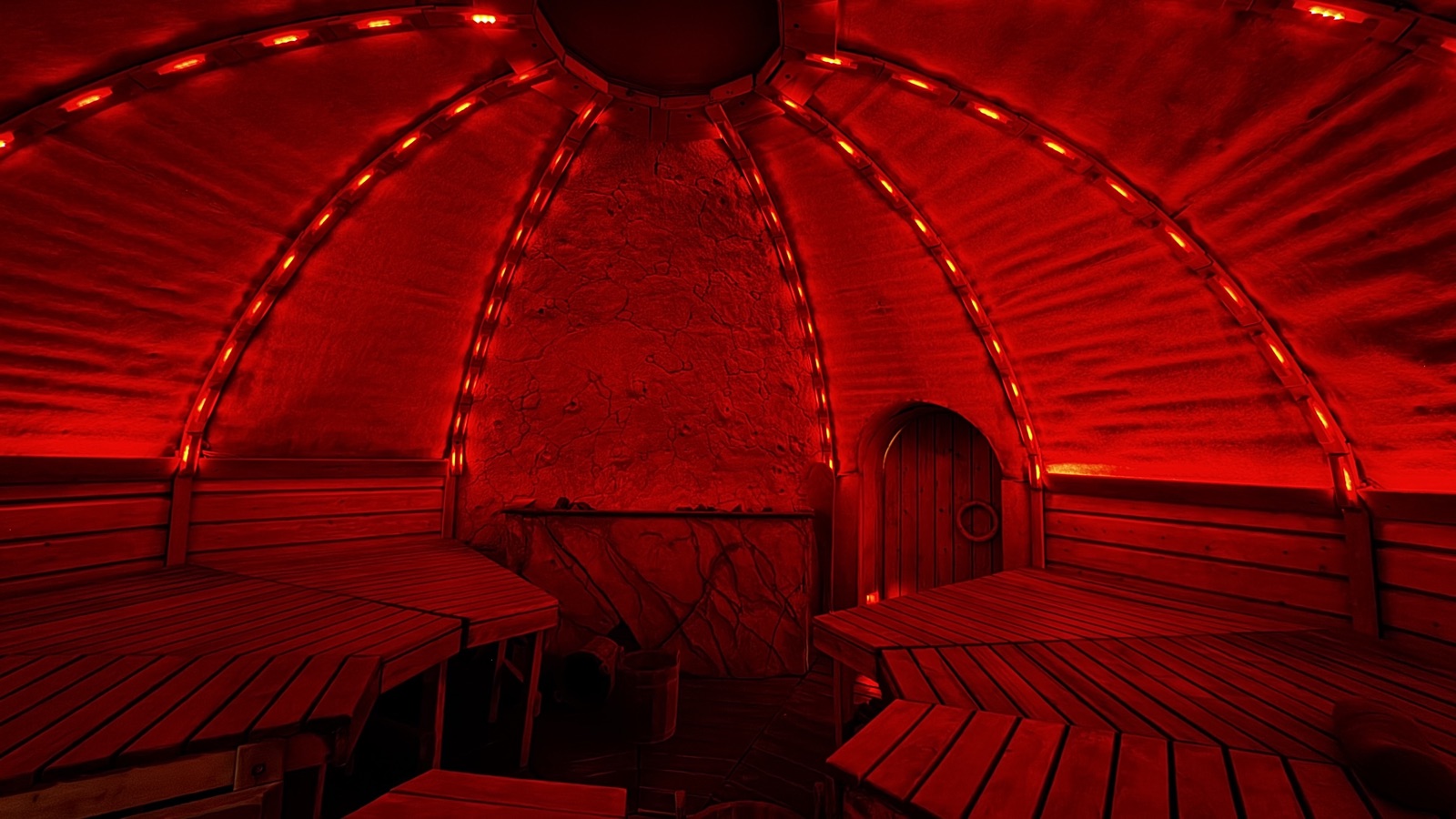
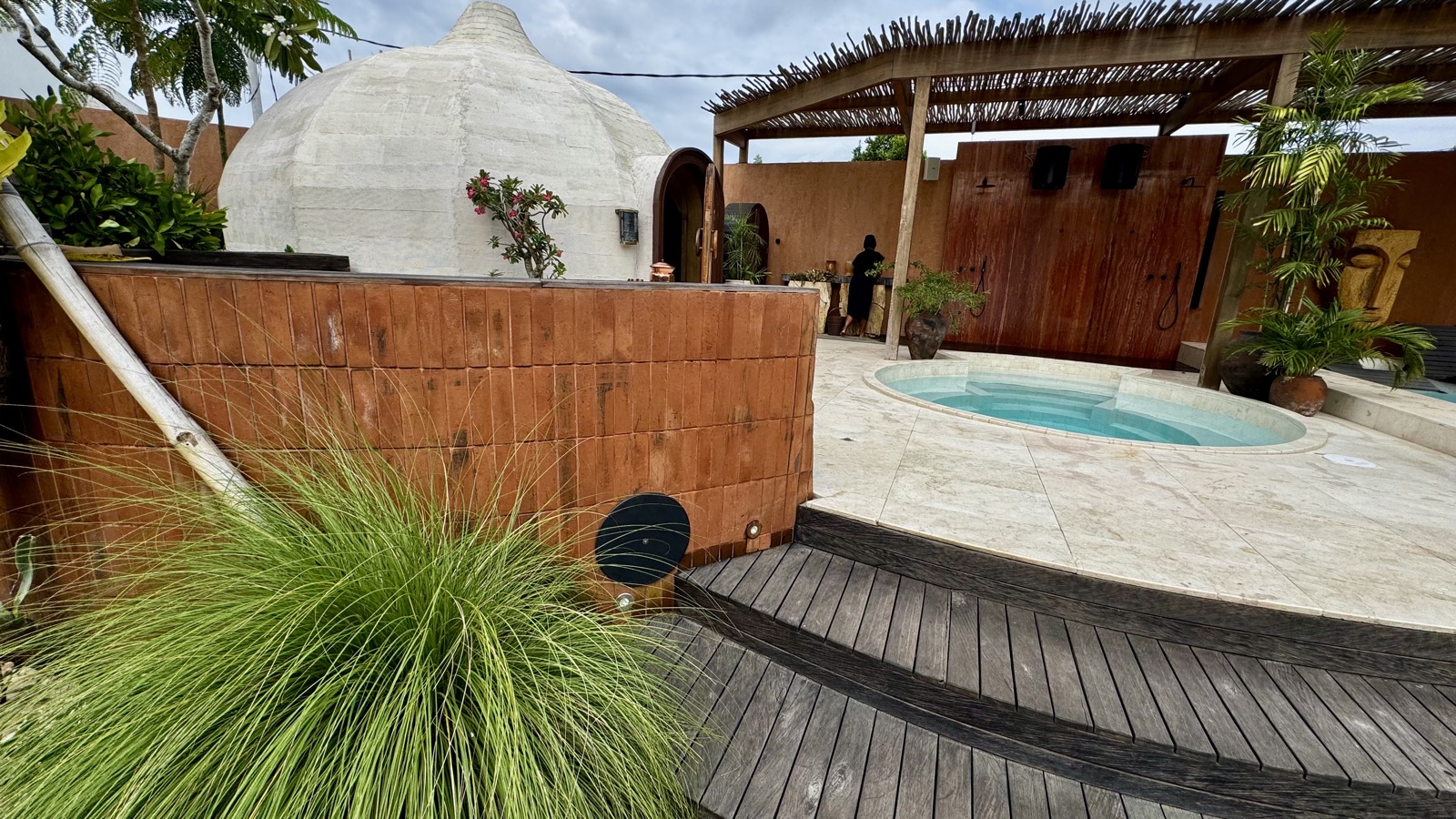
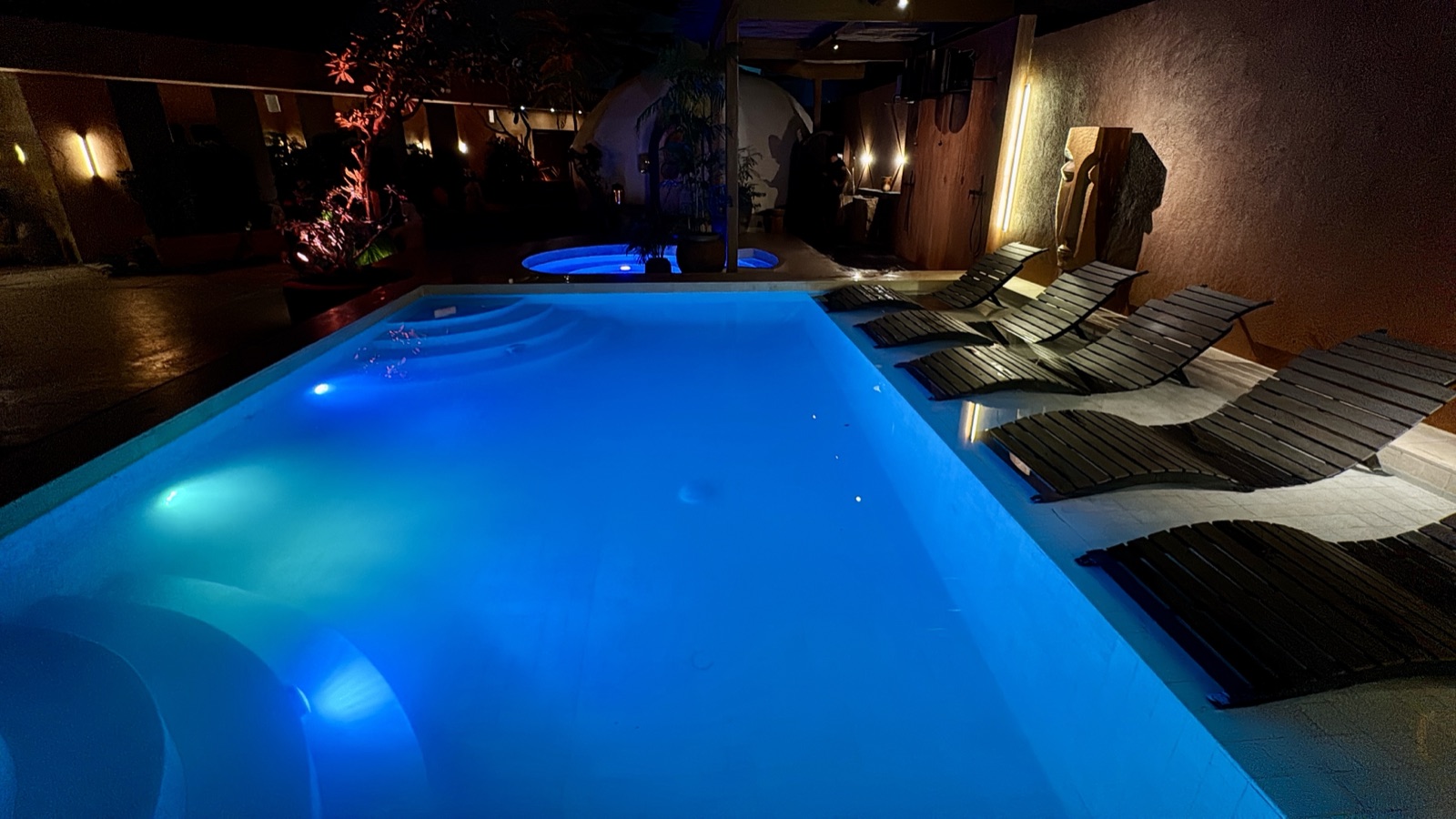
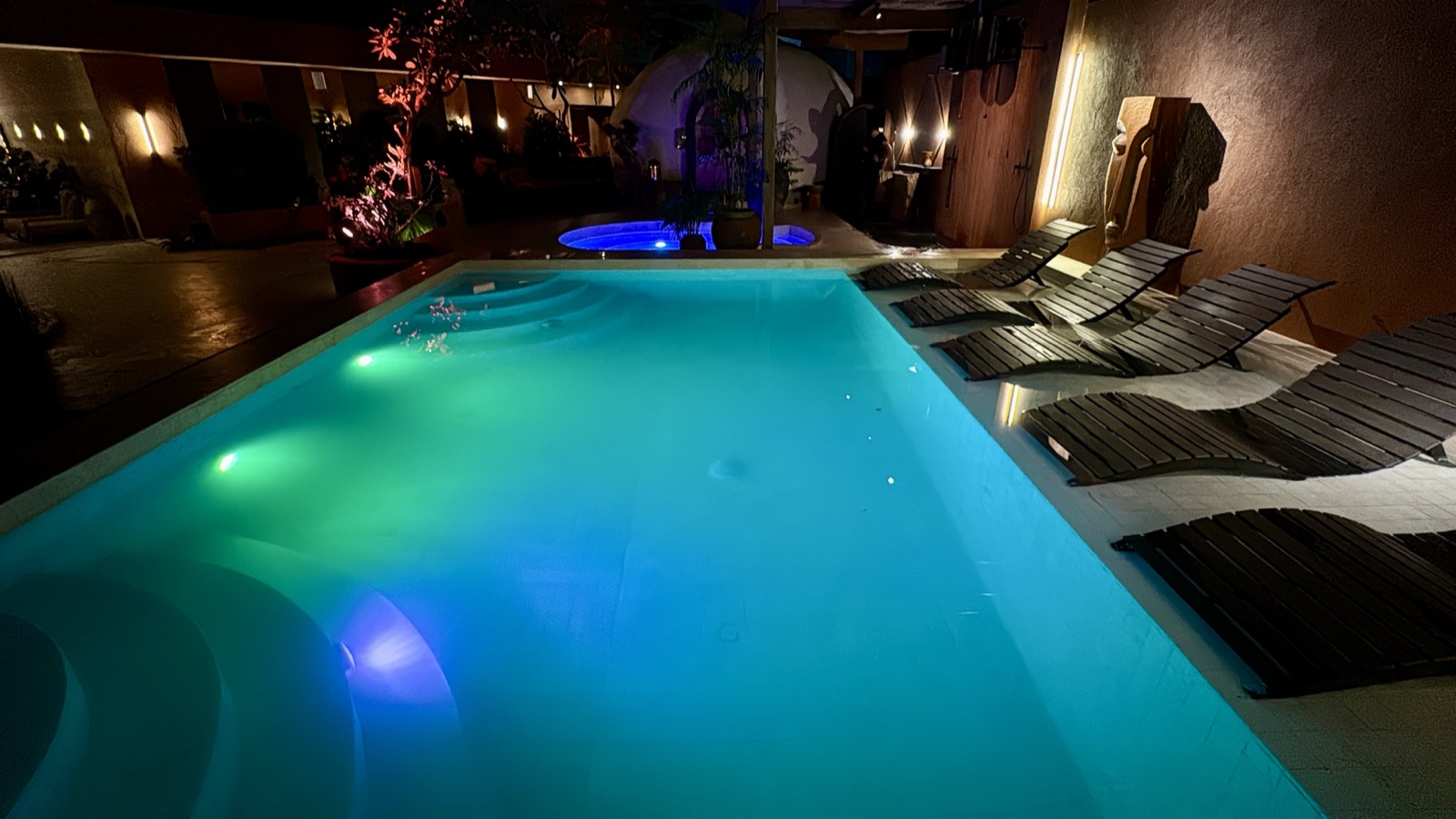
The dome lighting is this project’s honest lesson — and only the dome lighting. The venue’s DMX system runs as designed: two 105 W water-ripple projectors at +3.4 m drawing moving water across the pool wall, mini-downlights in the risers of the fireplace amphitheater’s four tiers at R1800–R2700, fiber optics at the water; the pool scenes in the gallery photos — blue to green — are that system at work. Inside the domes, a separate installation: 153 addressable RGB modules — IP68, 12 V — tracing the ten ribs and the bench line, built for pixel-level scenes.
That dome installation went to local subcontract crews — several in succession — and did not hold the drawing standard. The result could not be reworked into reliable control. The dome light in the gallery photo is this installation: it runs static — beautiful, and fixed.
The supervision gap was ours to close, and the lesson outlived the defect. Since ATMOS, full coordination and installation supervision is a written line in every TAS.AC proposal — the drawings now arrive with the engineer who stands over their execution. The client is reworking the lighting; this page will follow it.
The system — reference
| Area | Loudspeakers | Environment / modeled SPL |
|---|---|---|
| Steam dome 1 · dome 2 | 2× 10-inch two-way per dome — replaceable units, model not published | 50 °C / 100 % RH · 102 dB @ 1 kHz |
| Outdoor — pool, fireplace, water zone | 9× Yamaha VS6 surface + 2× Yamaha VXC8 SB subs | open coastal air · 101 dB @ 1 kHz |
| Lobby & reception | 4× Yamaha VS6 + 1× VXC8 SB sub | indoor · 103 dB @ 1 kHz |
| Massage rooms (4) | 4× Yamaha VXC6 in-ceiling | indoor |
| Lockers, WCs, showers | 8× Yamaha VXC6 in-ceiling | wet areas |
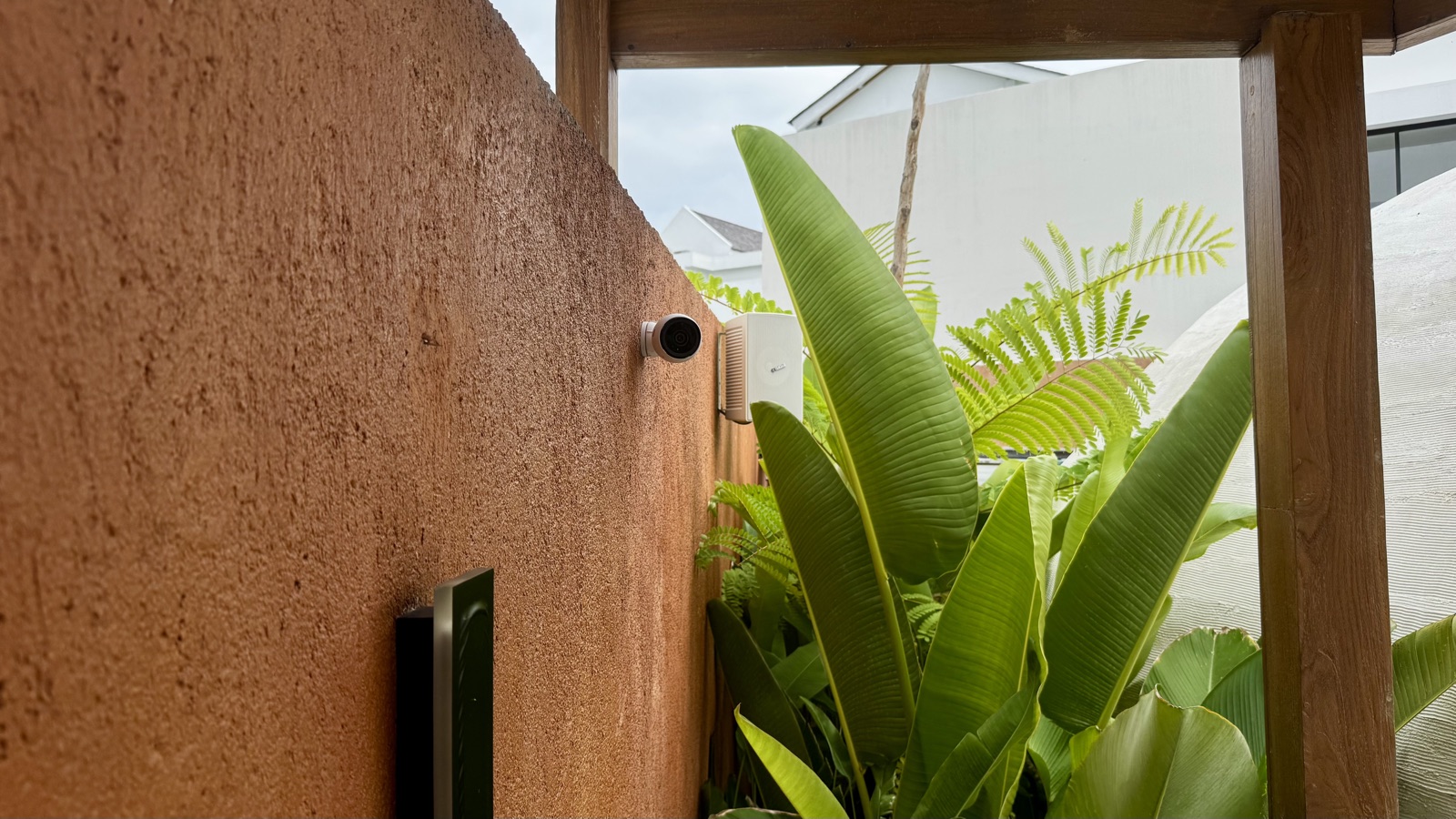
Head end: Allen & Heath AHM16 16×16 matrix + AHM-Dante-A card · 4× S-Track Whale 46 DSP amplifiers (4×600 W, Dante) · 40 documented lines — 6 Cat6E, 4 matrix-to-amp ties, 30 speaker runs, the longest 92 m to the far dome · VXC6 ceiling units sit in ø247 mm cutouts. Network & CCTV: Ubiquiti UniFi — U6 Lite and AC Mesh access points (coverage expanded since the 2024 design) · US-24-250W PoE switch · 18-line / 656 m Cat5E star from the server room · 7× UVC-G3-Bullet into the resort’s 59-camera UniFi Protect · captive portal on the venue’s own web server via UniFi Guest Hotspot.
What does spa audio cost?
There is no published total for ATMOS. The number moves with zone count, the matrix-and-DSP head end, tuning hours inside hot rooms, and the environment strategy — a replaceable-speaker approach prices differently from marine-rated survivors. How TAS.AC prices this work is at /pricing/.
Where ATMOS Social Steam Club stands
ATMOS is operational. The claim that carries this page is the owner’s: the in-dome speakers have played through a year and a half of daily steam without replacement. The SPL figures are modeled design targets, not measurements in the finished rooms. The dome lighting runs static — stated because a case that only reports victories is advertising, and this one is a record.