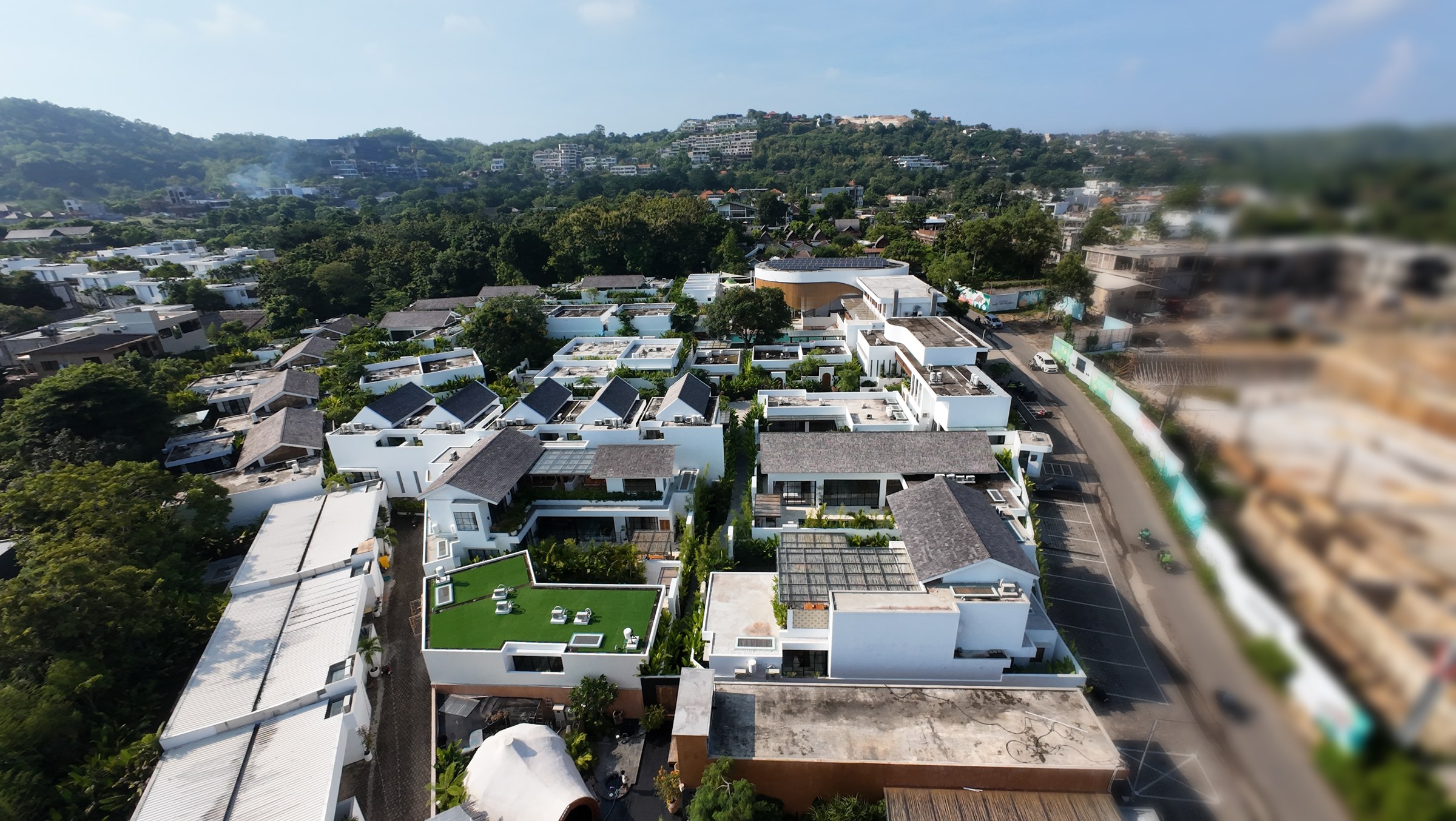
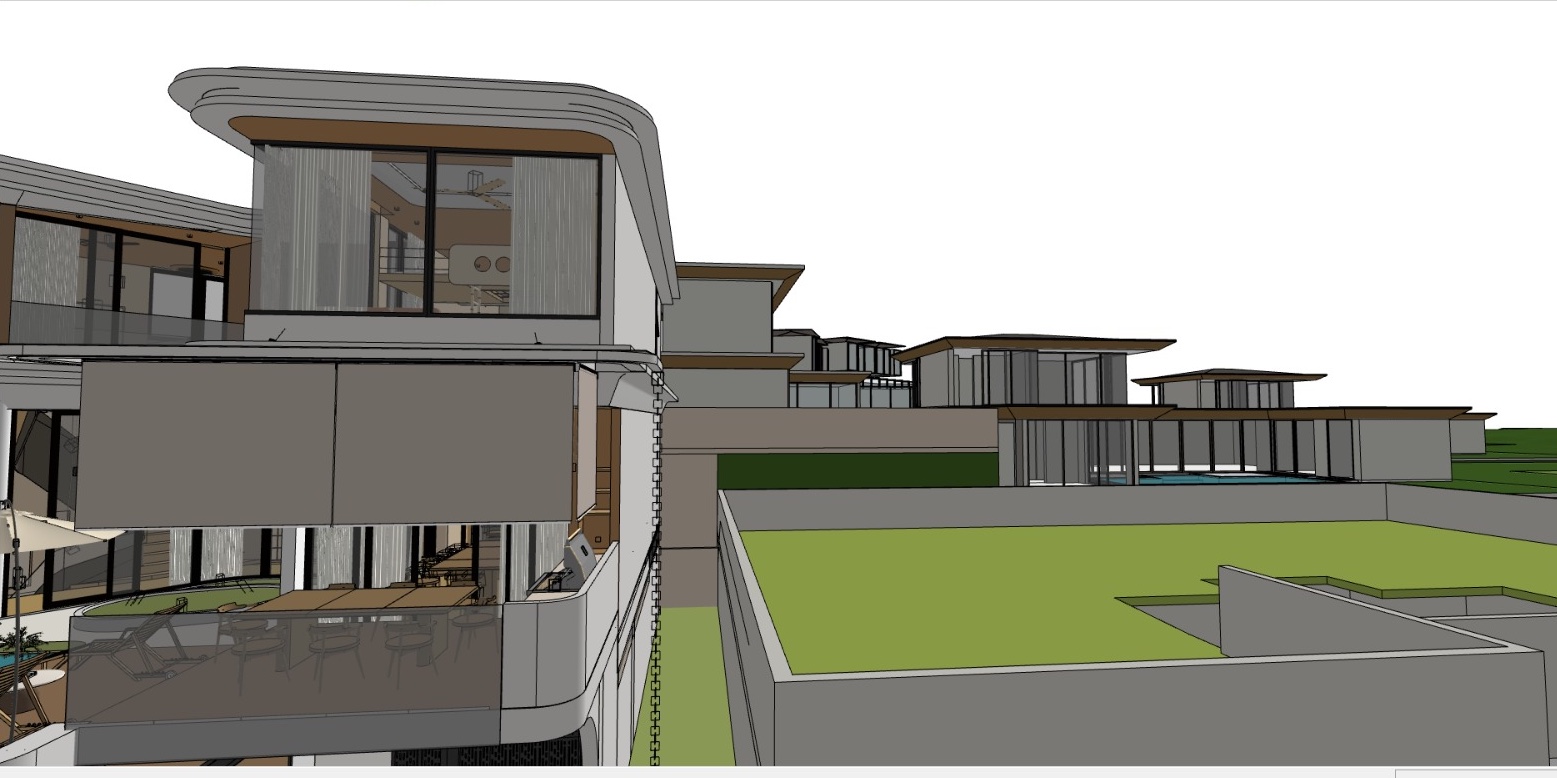
Heat Space — hot yoga studio, Bali. A square practice hall built in drywall, with a glass wall standing parallel to a mirrored wall — one of the hardest ordinary rooms to put a live microphone in. Role: TAS.AC — sound system design, equipment specification, installation instructions and tuning. Key figures: 8 loudspeakers in 3 zones · 8 amplifier channels with independent DSP delay and EQ · 2 Bluetooth sources · one 3 kVA stabilizer between the grid and every device. Status: operating. Figures on this page are the design and installation specification.
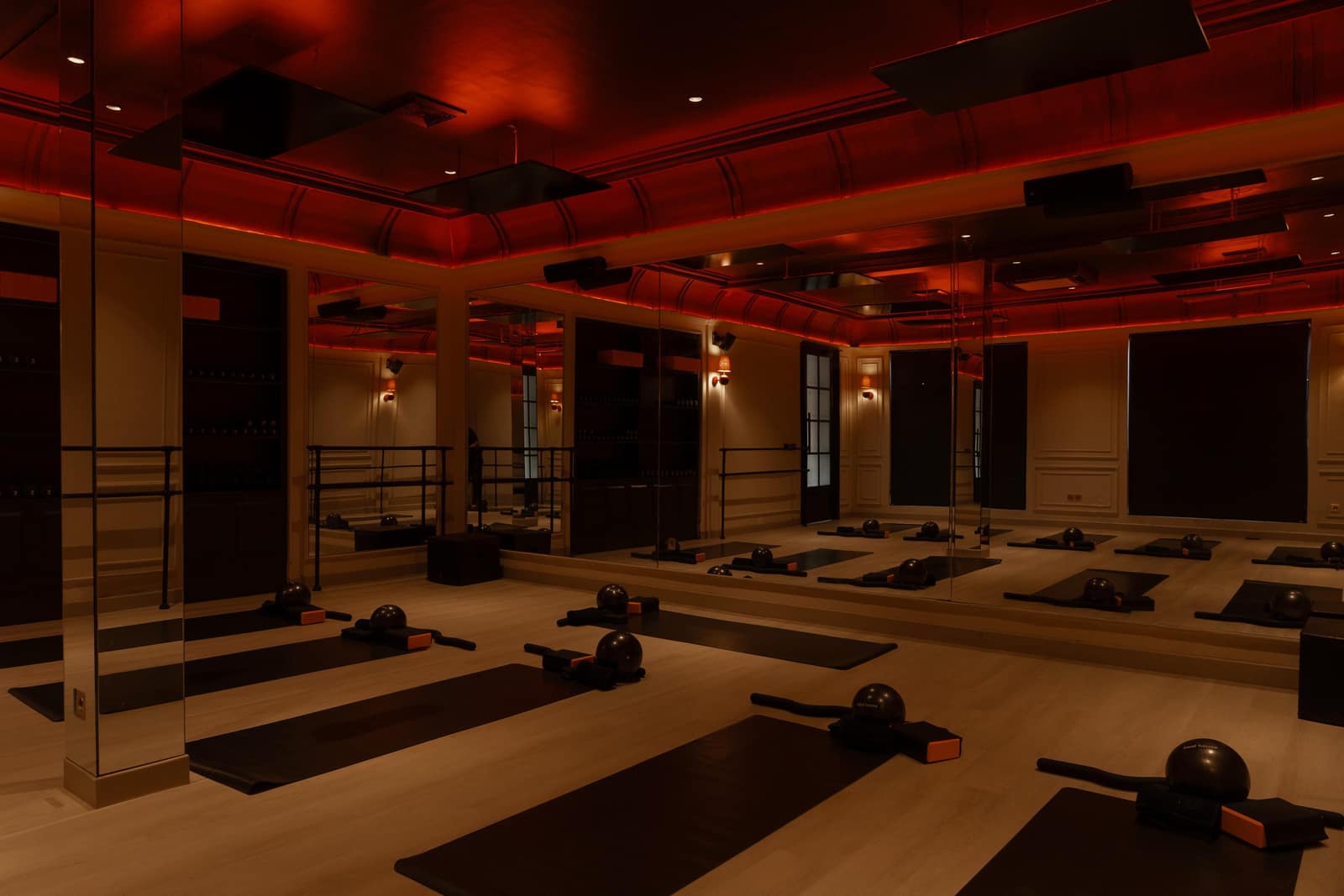
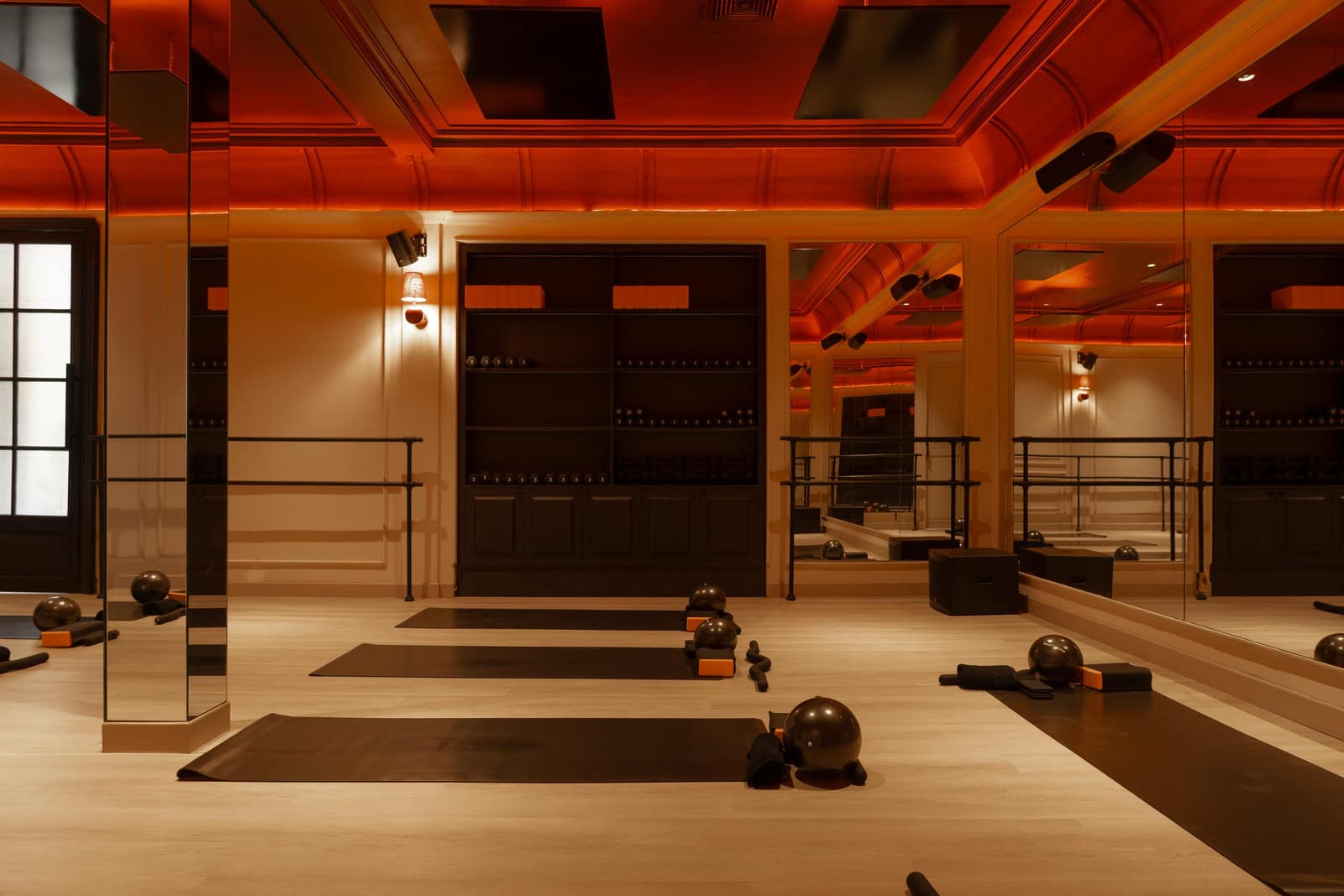
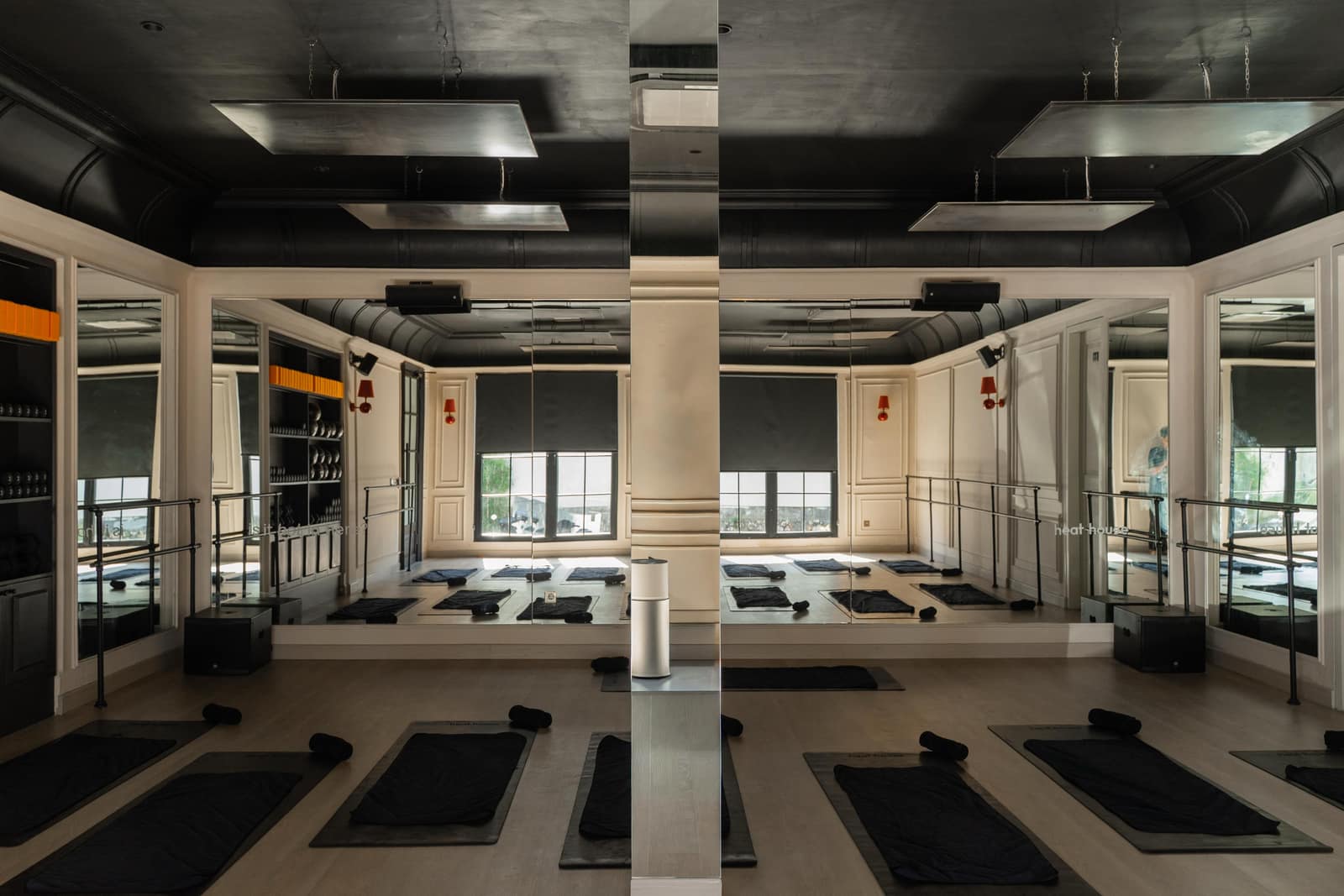
The practice hall at Heat Space looks the way a studio owner wants it to look: a square room, bright drywall, a glass wall for daylight, a mirrored wall so every mat can see the trainer, the whole volume held at a sustained 40 °C and 60 % humidity — this is hot yoga. Read acoustically, every surface on that list throws sound straight back.
The Heat Space hall answers back
Glass and mirror reflect mid and high frequencies almost completely. At Heat Space the two stand parallel. Parallel reflective walls trap sound between them — a clap in the empty hall returns as a rapid metallic ring, a flutter echo.
The square plan adds the low end: two floor axes of equal length stack their room modes on the same frequencies. Certain notes boom; their neighbors vanish.
A trainer’s headset mic in front of a loudspeaker system forms a loop: the mic hears the speakers, the speakers replay the mic. In a reflective room the loop gain peaks exactly where the room resonates, and the first squeal arrives at the volume a class actually needs.
The central risk at Heat Space was not whether music would play, but whether a trainer could be amplified in a glass-and-mirror box at all. A class runs on cued breath and counted movement. One feedback ring cuts through both, and a studio whose microphones cannot be trusted goes back to shouting.
Why does a mirrored studio need DSP amplifiers?
Because the room’s faults live in time and in frequency, and DSP works in both. The two amplifiers — a TAS DP4035 and a DP4025, eight channels between them — apply delay and equalization independently per channel: EQ pulls down the frequencies the square room stacks, delay time-aligns the side speakers to the front pair. On the microphone path, narrow notch filters sit at the frequencies that ring first, found and set one by one during tuning.
The delay speakers are the quiet half of the answer. Two T204 units on the side walls reach the back half of the hall so the front pair never has to; DSP delays their signal to match the front wavefront, so listeners still place the sound at the front while the system runs quieter. Less energy sprays at the glass and the mirror; more headroom opens between class volume and the feedback threshold.
The front columns tilt 10 degrees down for the same reason: direct sound aims at mats and bodies — the only absorption a full studio reliably has — instead of at the walls that answer back. The angle locks only after temporary fixing and the sound engineer’s confirmation.
Eight speakers, placed to the centimeter
The installation instructions fix every position. Two T341 column speakers hang at the front corners, on the hall’s concrete wall between the mirror and the plaster: acoustic center at 255 cm, exactly 160 cm from each side wall, on mandatory ST121 brackets. Two T204 delay speakers sit on the side walls, symmetric, at the same 255 cm, aimed at the central audience zone.
Two S12 subwoofers rest on the floor at the front corners, each with a minimum 5 cm of ventilation clearance behind it. Two more zones run off the same rack: a ceiling speaker in the exact center of the lobby, another over the washroom, midway between the two sinks.
Speaker runs are Canare throughout, routed clear of AC power lines, with a 40–50 cm service loop at every device.
How does a trainer run a class here?
With nothing to operate in the hall. The trainer wears a wireless headset microphone — two headsets on one base — and starts the music from a phone over Bluetooth. Two receivers keep the hall and lobby zones independent, so the front-desk playlist survives every class; one mixer ties microphone and music together, controlled over Wi-Fi.
The rack lives in the storage room: the practice room holds a sustained 40 °C by design, and electronics inside it age fast. The speakers that stay in the heat are IP65-rated; everything fragile lives outside.
Power reaches the rack through one path only: building line, Samoto 3 kVA voltage stabilizer, rack PDU, equipment. Grounding checks at the stabilizer and PDU come before the first note plays — the discipline that keeps a microphone system hum-free on an island grid.
The system — reference
| Zone | Loudspeakers | Driven by |
|---|---|---|
| Main hall — front | 2× TAS T341 column (3×4.5″ + 1×3″, 200 W) | DP4035 CH1–CH2 · Canare 2S7F |
| Main hall — bass | 2× TAS S12 subwoofer (12″, 400 W) | DP4035 CH3–CH4 · Canare 2S9F |
| Main hall — delay | 2× TAS T204 (2×4″, 100 W), side walls | DP4025 CH1–CH2 · Canare 2S7F |
| Lobby | 1× TAS PRO-108D ceiling (8″) | DP4025 CH3 · Canare 2S7F |
| Washroom | 1× TAS PRO-Q4 ceiling (4.5″) | DP4025 CH4 · Canare 2S7F |
Sources in the rack: Behringer X Air XR12 digital mixer, TAS MS20HS headset-microphone base with two wireless headsets, 2× Klark Teknik DW20 Bluetooth receivers, TP-Link Archer AX12 router for mixer control.
What does hot yoga studio sound cost?
Heat Space has no published total. The number moves with DSP amplification instead of plain power, a delay line and the tuning hours behind it, wireless microphone and dual-Bluetooth infrastructure, and a stabilized, grounded power path. How TAS.AC prices this work is at /pricing/.
What the Heat Space owner gets
Heat Space is operating; measured results are not yet published. The yardstick the system answers to is behavioral: a headset microphone at class volume with no ring, even level at every mat, a lobby playlist independent of the hall, and a first equipment failure that is years out — not the first wet season.