Luna — flagship beach club of Nuanu Creative City, Nyanyi Beach, Tabanan, Bali. One Allen & Heath AHM-64 with a reserve Dante server routes 13 sources across 21 zones under a five-tab staff app. Role: partnership with Mediatact. Mediatact — sales, client relationship, app co-design; TAS.AC — technical design, drawings, system architecture, network specification, patch, commissioning. Key figures: 21 × 13 in one patch · 44 Dante channels to 5 AV rooms · redundant core · 10-sheet drawing set · TAS.AC’s first project. Status: operational — opened January 2024, running daily since.
What did TAS.AC engineer at Luna Beach Club?
TAS.AC engineered the sound-system control for Luna Beach Club at Nuanu Creative City, Nyanyi Beach, Tabanan, Bali: the technical design and drawings, the system architecture on an Allen & Heath AHM-64, the 21-zone × 13-source patch, the Dante network specification, and the commissioning. The work was a partnership with Mediatact — sales, client relationship and co-design of the staff app on their side.
Luna was TAS.AC’s first project, engineered like a mature one — a 10-sheet set of working drawings and redundancy in the core from day one. A first project earns trust one way: everything written down and checkable.
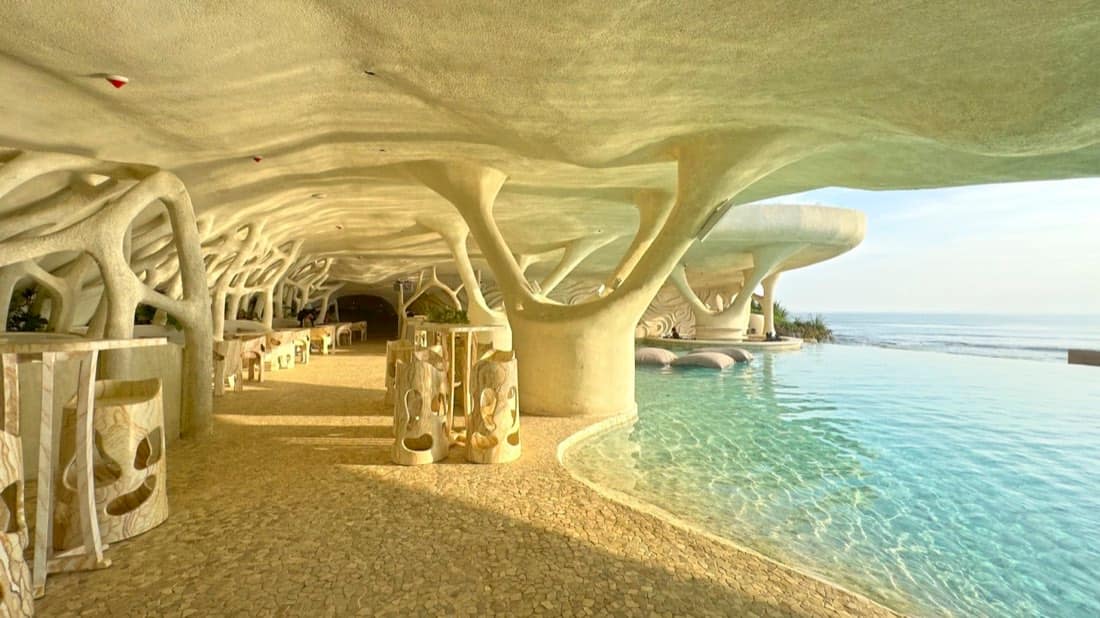
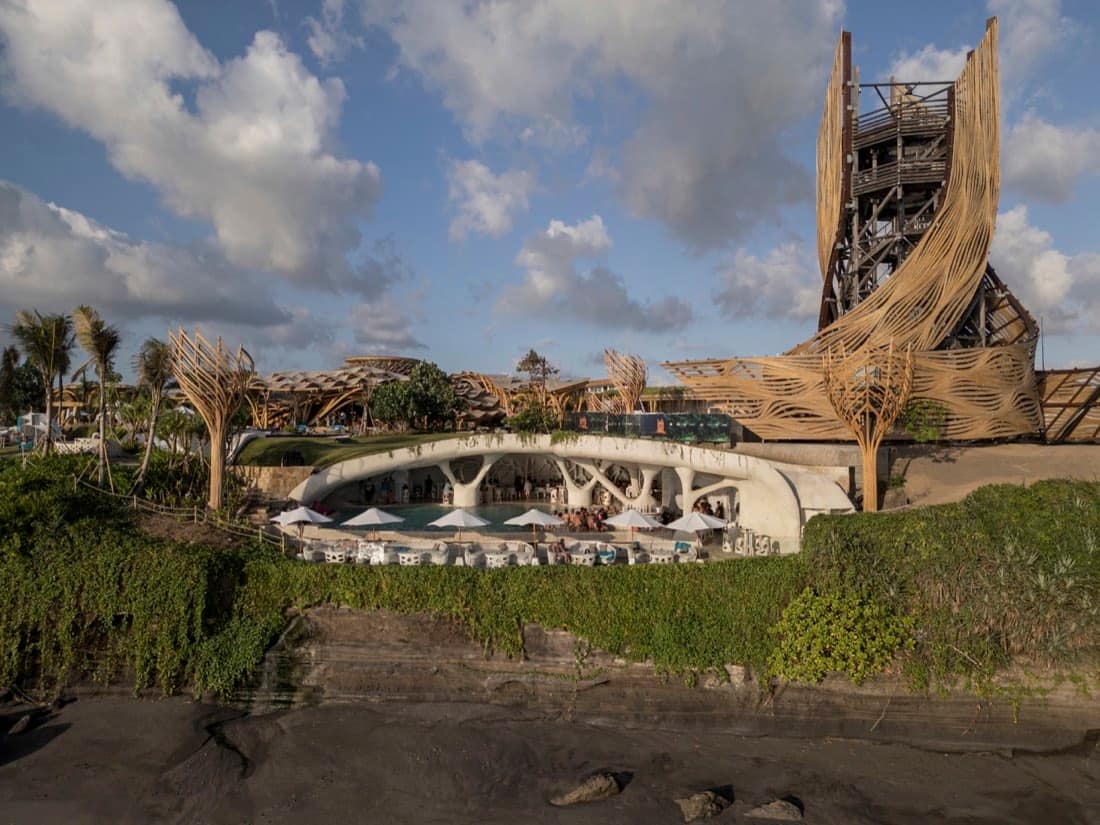
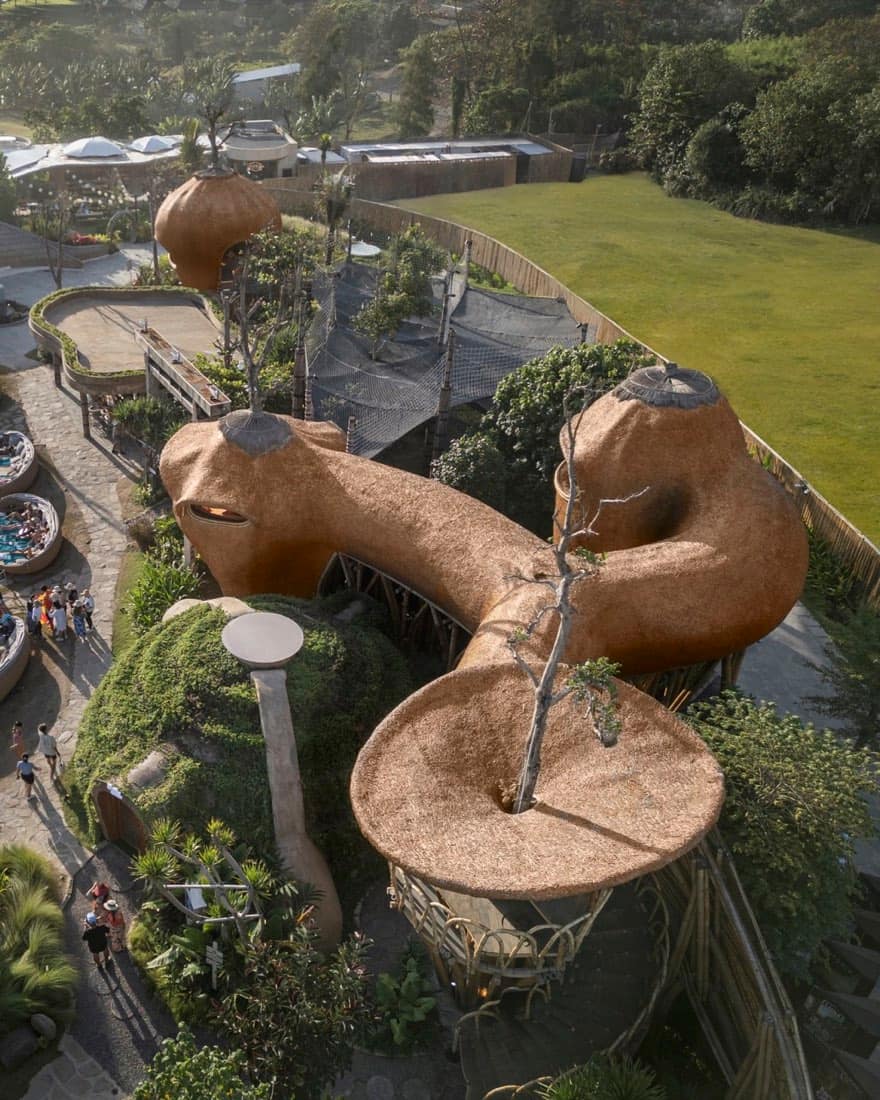
A guest crosses restaurant, garden pods, beer garden, main stage and cliff pools in one evening, and Luna sells each as a different place. The cave’s stone surfaces hold bass, the pods sit open to wind and surf, the restaurant stays conversational a few meters from a DJ booth. The control system keeps those places separate.
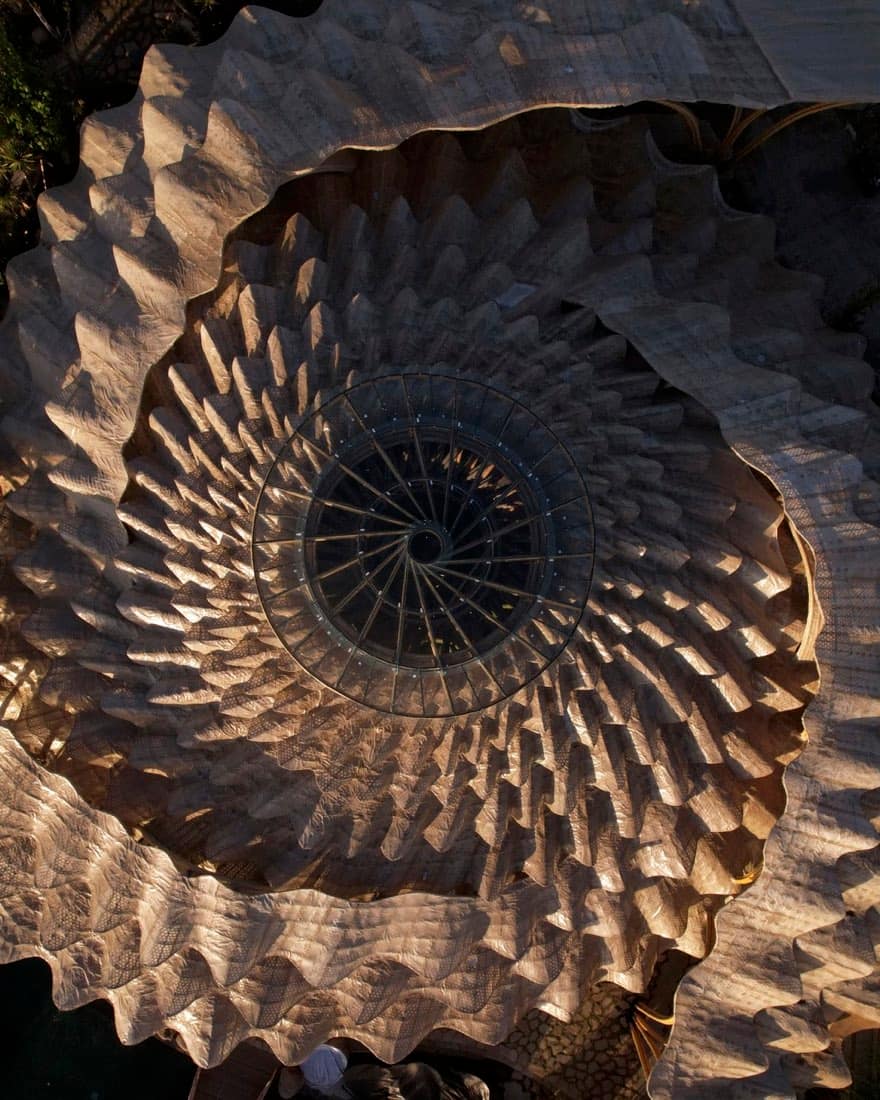
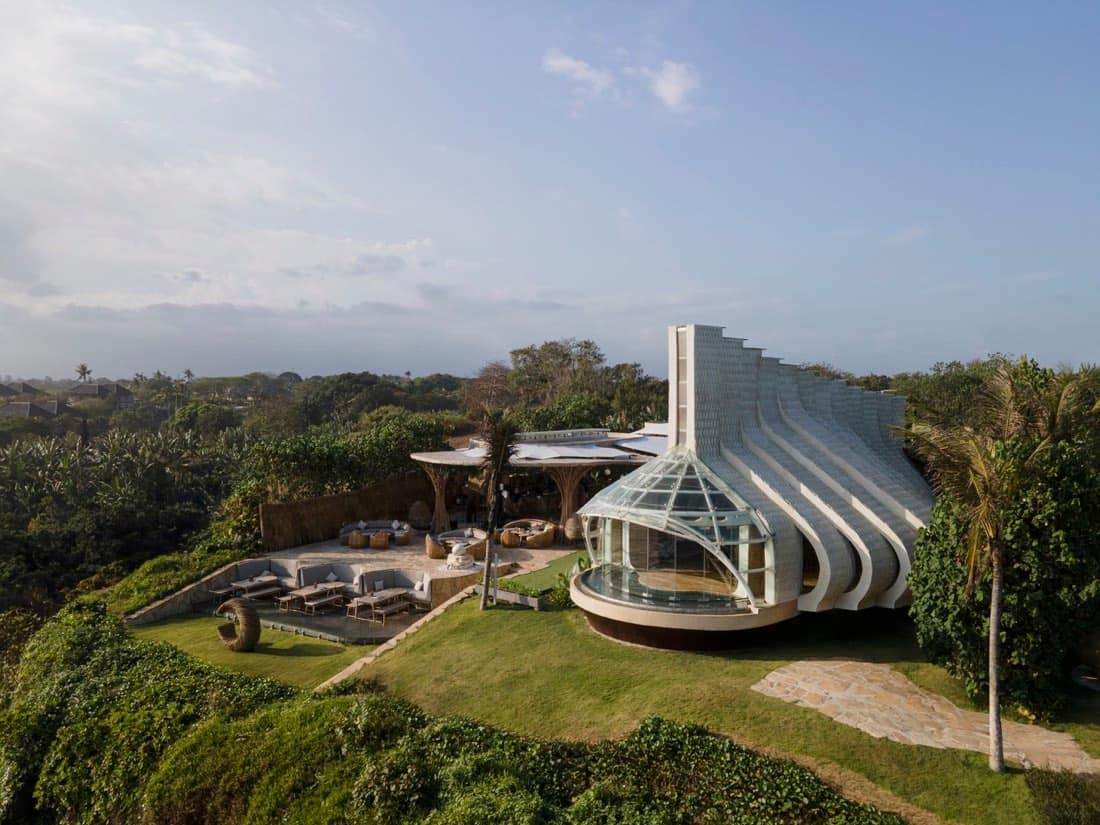
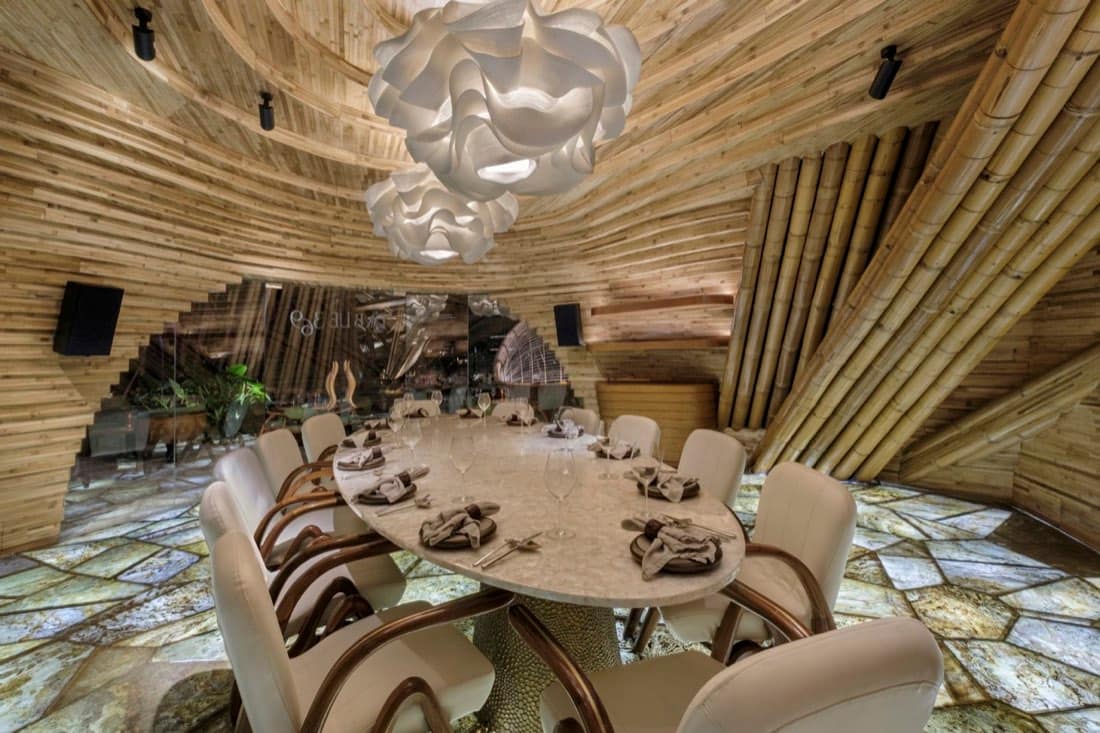
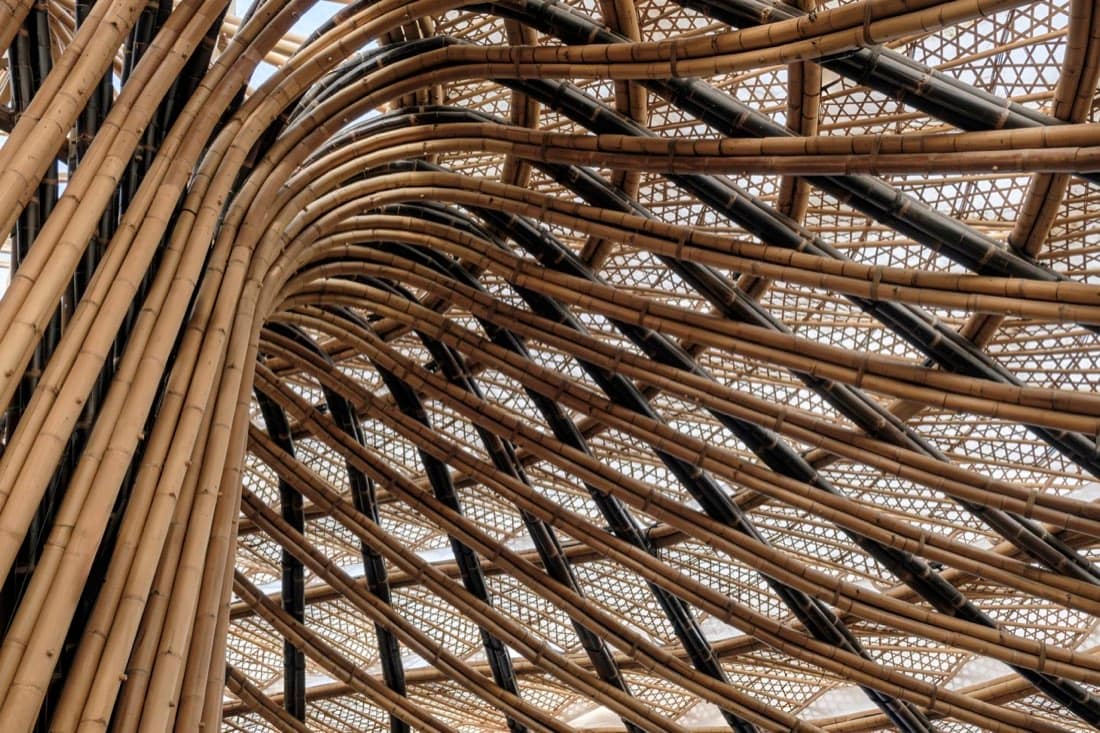
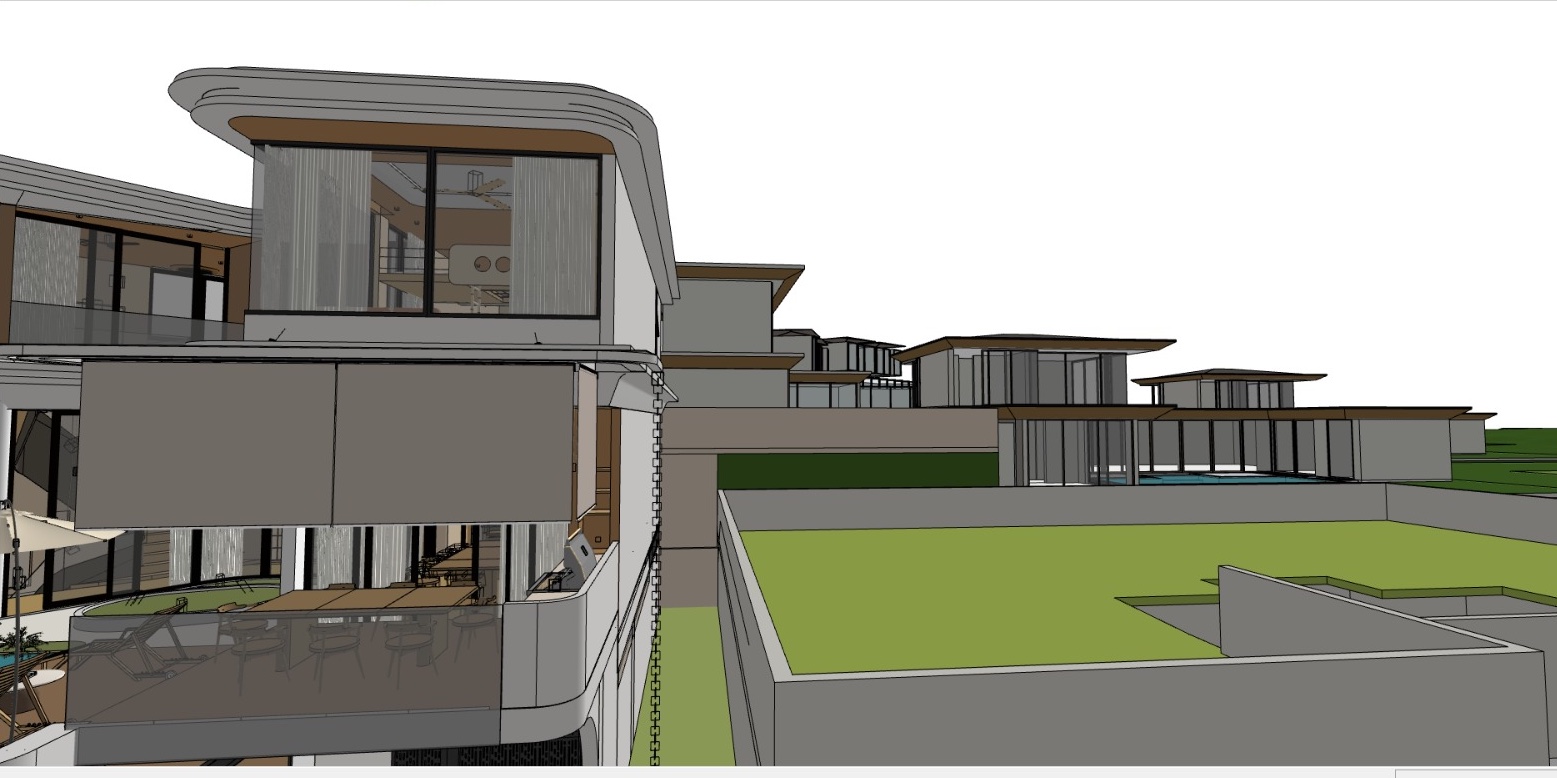
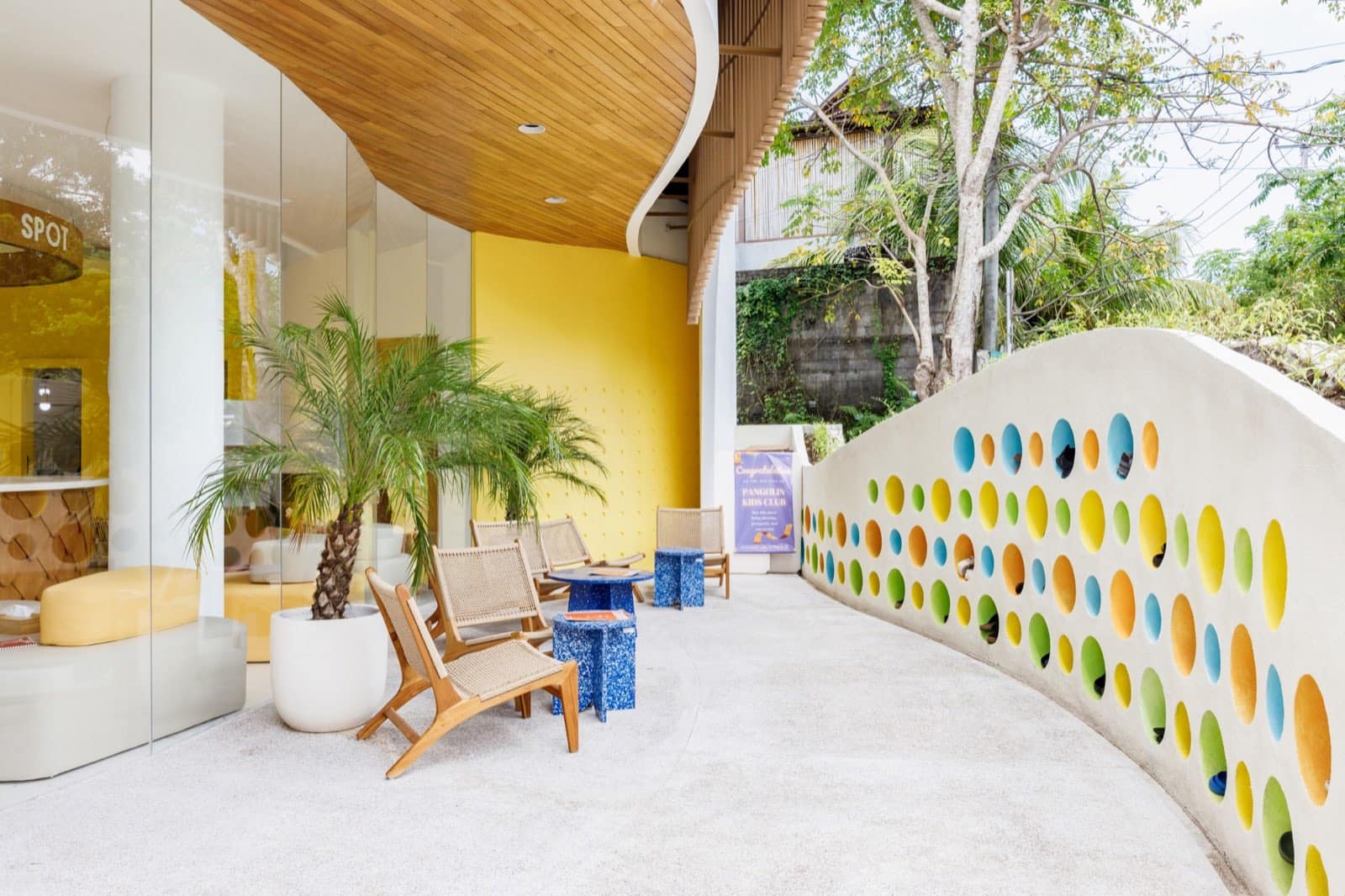
The building sets the terms. Inspiral Architecture and Design Studios drew Luna as a bamboo-and-basalt vortex — Charlie Hearn’s structure took Silver at IADA 2024 — and the racks, cable runs and control gear disappear into it. What guests see is the architecture.
Why build the core on an AHM-64 — and what backs it up?
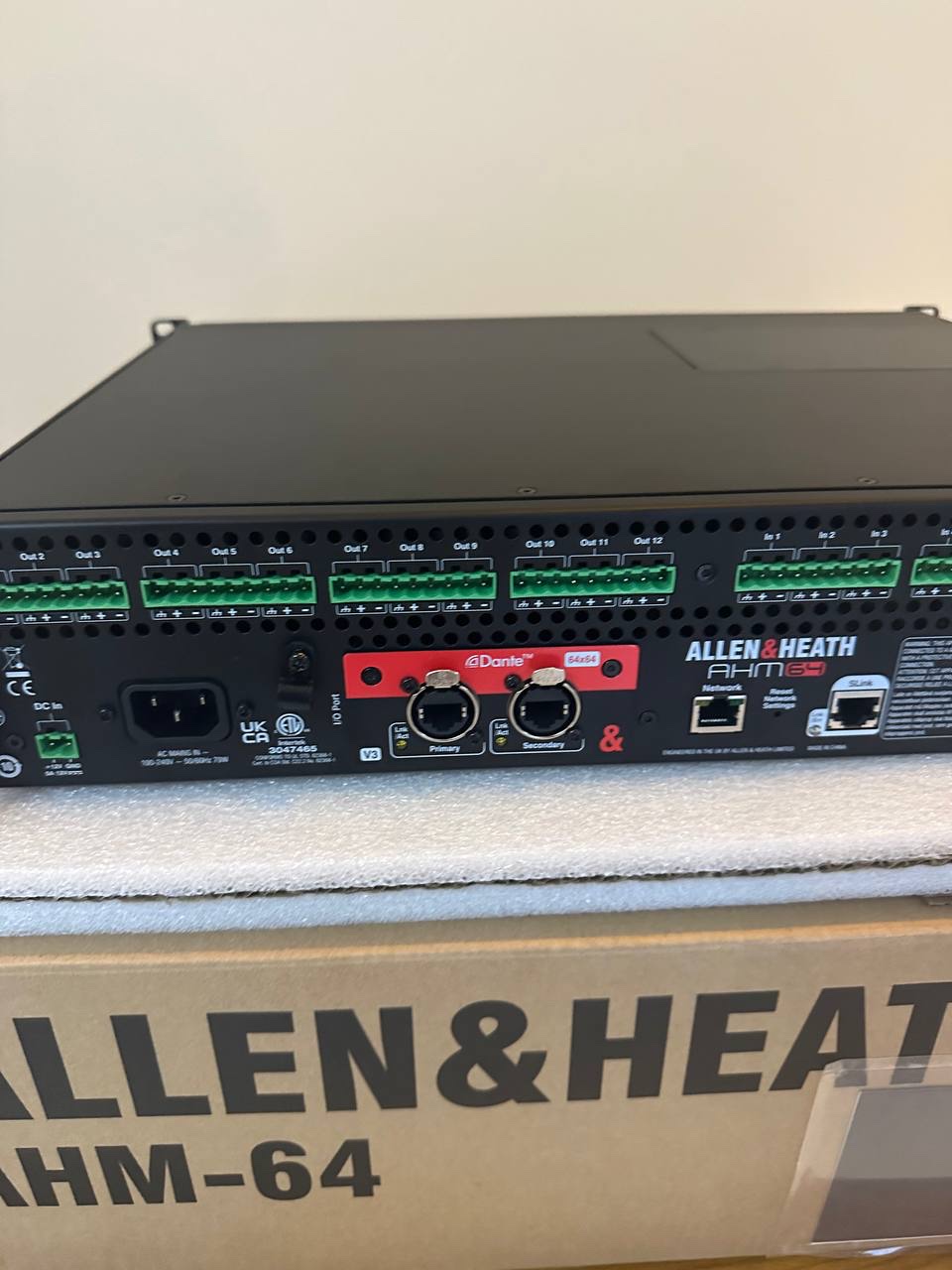
Four reasons, all checkable. A 64×64 Dante matrix — the documented patch takes 44 output channels, and headroom stays. Zone processing at every output, and Custom Control — Allen & Heath’s toolkit for staff interfaces. And redundancy: Primary and Secondary Dante ports, plus a second machine in the server room — a reserve Dante server in the same broadcast domain, a computer with its own Dante card that takes the routing through itself.
The rear panel carries a red 64×64 Dante card with two network ports — photographed 28 December 2023, the processor still on its shipping box, mid-commissioning.
Why are the patch and the network specification separate work?
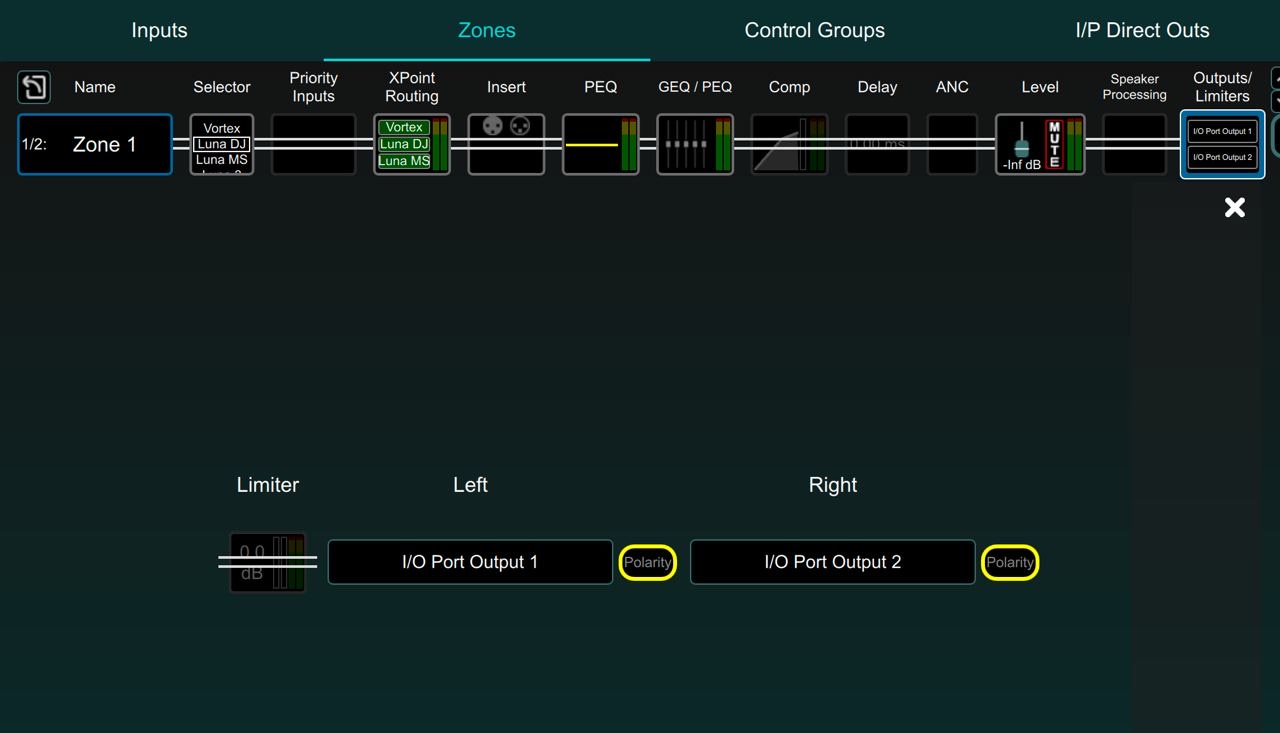
Because they are different documents. The patch is Luna’s logic inside the AHM-64 — each zone runs its processing chain: source selector, crosspoint routing, PEQ and GEQ, compressor, delay, ambient noise compensation, level, output limiters — under time-of-day scenes. The network specification is what that logic rides on: TAS.AC wrote the requirements; the project’s contractors built to them. TAS.AC did not build the network.
The specification fixed the shape: fiber optics in a ring plus a star from the server-room core to five AV rooms — BOH, Pods, Statue, Cave Pool, Wedding Temple. Cat6 within the rooms. The audio network runs isolated, internet disabled, the tablets’ management Wi-Fi held behind a firewall. At the far ends sit 22 K-Array amplifiers as Dante endpoints — the rig is a separate scope; the transport that reaches it is this design.
How do staff run 21 zones without an audio engineer?
Through a custom app built on Allen & Heath Custom Control, talking to the AHM-64 over the manufacturer’s proprietary protocol — volume and routing only. Five tabs: Map, Luna, Pods, Restaurant, Pool. Every zone gets the same three controls: source selector, level meter, fader. The patch decides everything else.
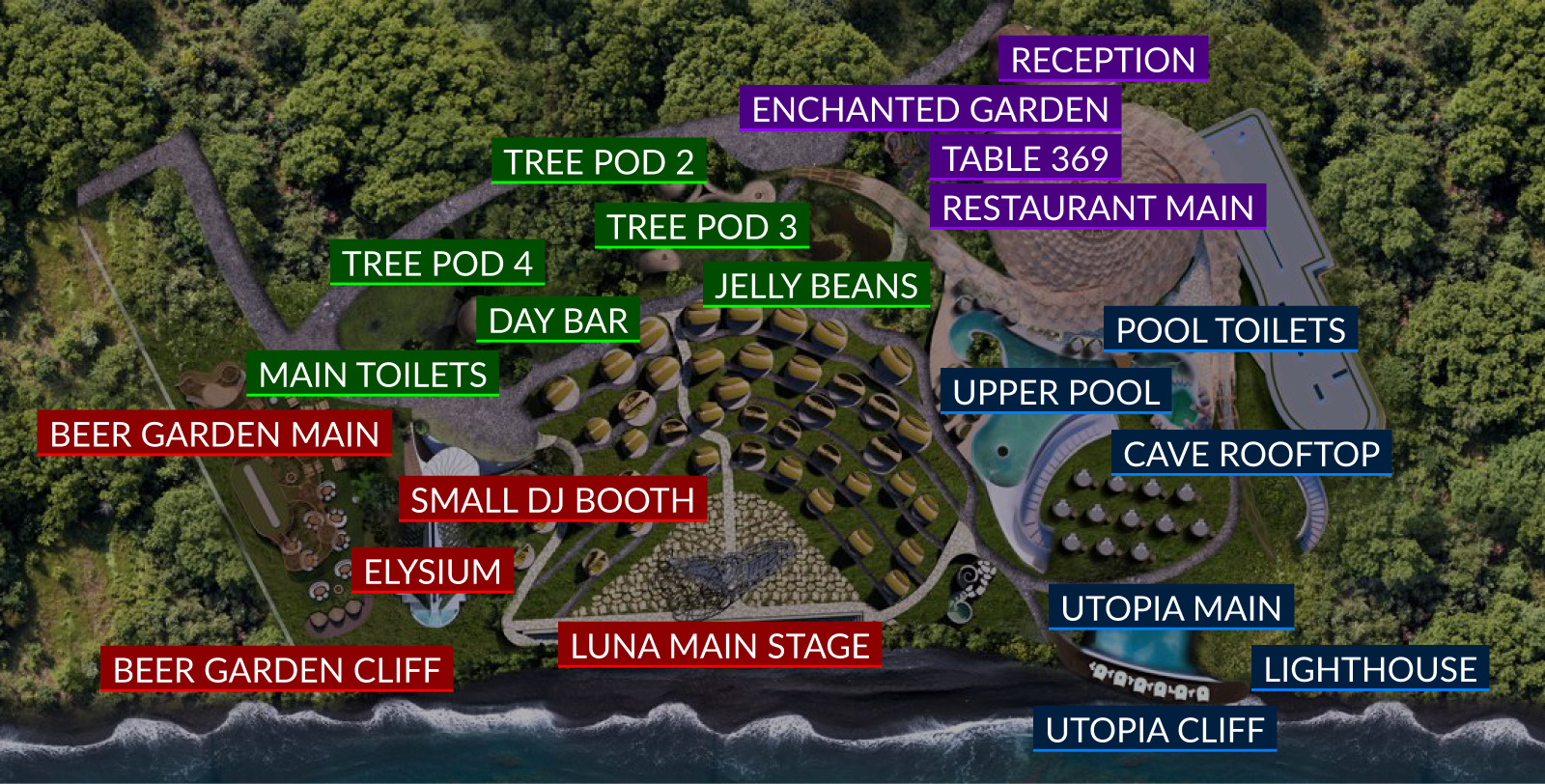
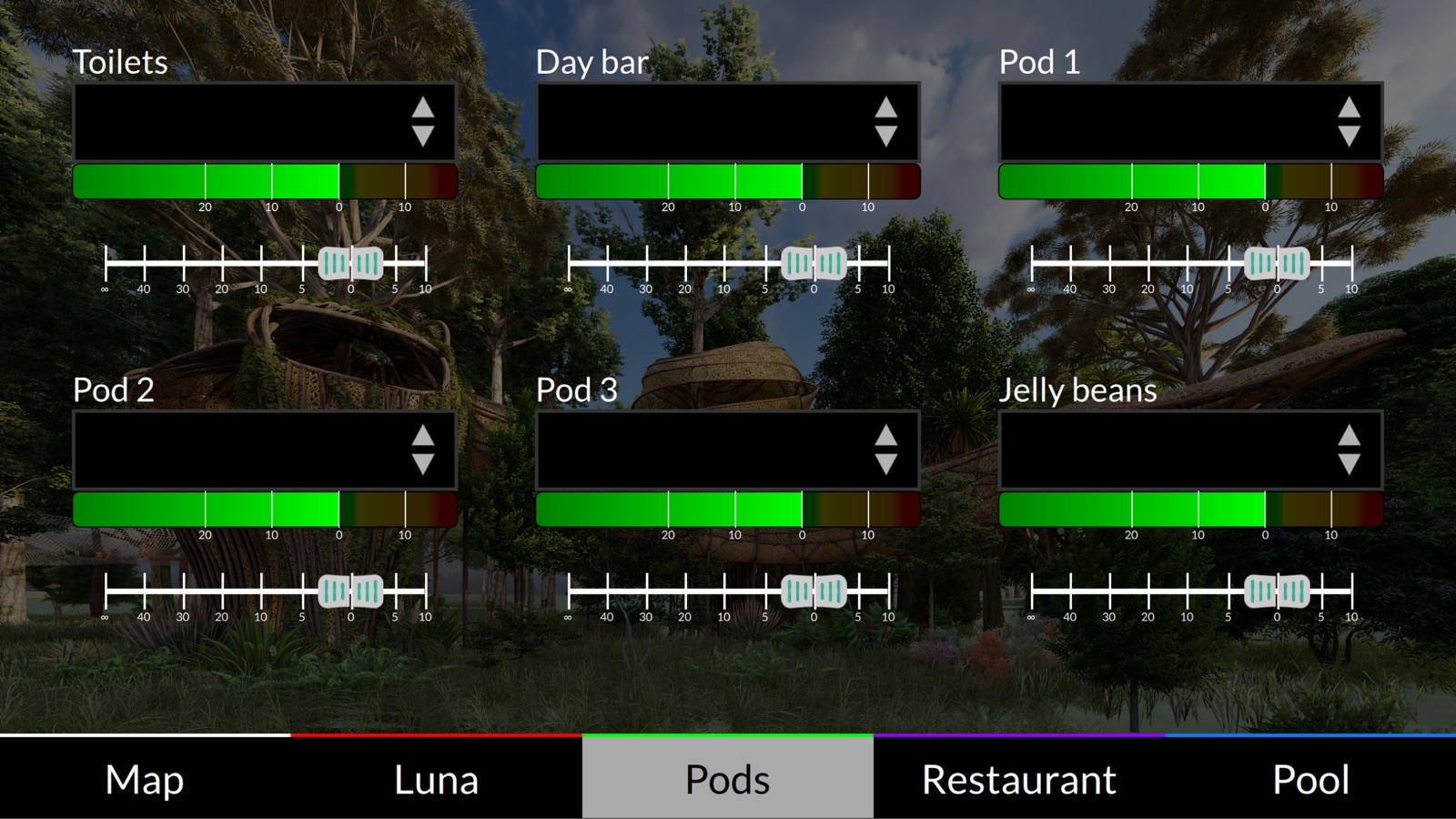
The Map tab is the venue from above: an aerial plan with all 21 zones named, Reception to Utopia Cliff, in four color groups. The other tabs group zones the way shifts work them, not the way the map draws them — Pods holds Toilets, Day Bar, Pods 1–3 and Jelly Beans as six identical strips.
A worked evening: a DJ on Luna Main Stage, an ambient channel in Restaurant Main, a sunset playlist at Upper Pool — three sources, three zones, one matrix, reassigned from the app in seconds.
Two screenshots bracket the delivery: the Pods tab on 29 November 2023, the finished Map screen on 25 January 2024 — the month Luna opened.
The 21 zones — reference
Zone names as in the app’s Map tab, by its four color groups:
| Group | Zones |
|---|---|
| Restaurant & arrival | Reception · Enchanted Garden · Table 369 · Restaurant Main |
| Garden & pods | Tree Pod 2 · Tree Pod 3 · Tree Pod 4 · Jelly Beans · Day Bar · Main Toilets |
| Stage & beer garden | Luna Main Stage · Small DJ Booth · Beer Garden Main · Beer Garden Cliff · Elysium |
| Pool & cliff | Upper Pool · Pool Toilets · Cave Rooftop · Utopia Main · Utopia Cliff · Lighthouse |
Core: AHM-64 (64×64 Dante, Primary + Secondary) + reserve Dante server · 44 Dante output channels to 5 AV rooms · 22 K-Array amplifiers as endpoints (rig — separate scope).
What does venue-scale audio control cost?
There is no published total for Luna. The number moves with zone and source counts, patch and scene-logic depth, core redundancy, the fiber backbone the specification demands, and whether staff get a custom interface or a stock panel. TAS.AC prices by scope — see how we price.
What has run since opening?
Luna opened in January 2024 and operates daily. Staff run all 21 zones from the five-tab app; the system drives the venue’s K-Array rig, a separate scope. No measured operational figures are published — the verifiable record is the drawing set, the patch and the app in daily service. The first system TAS.AC delivered still runs at Nuanu’s flagship venue.