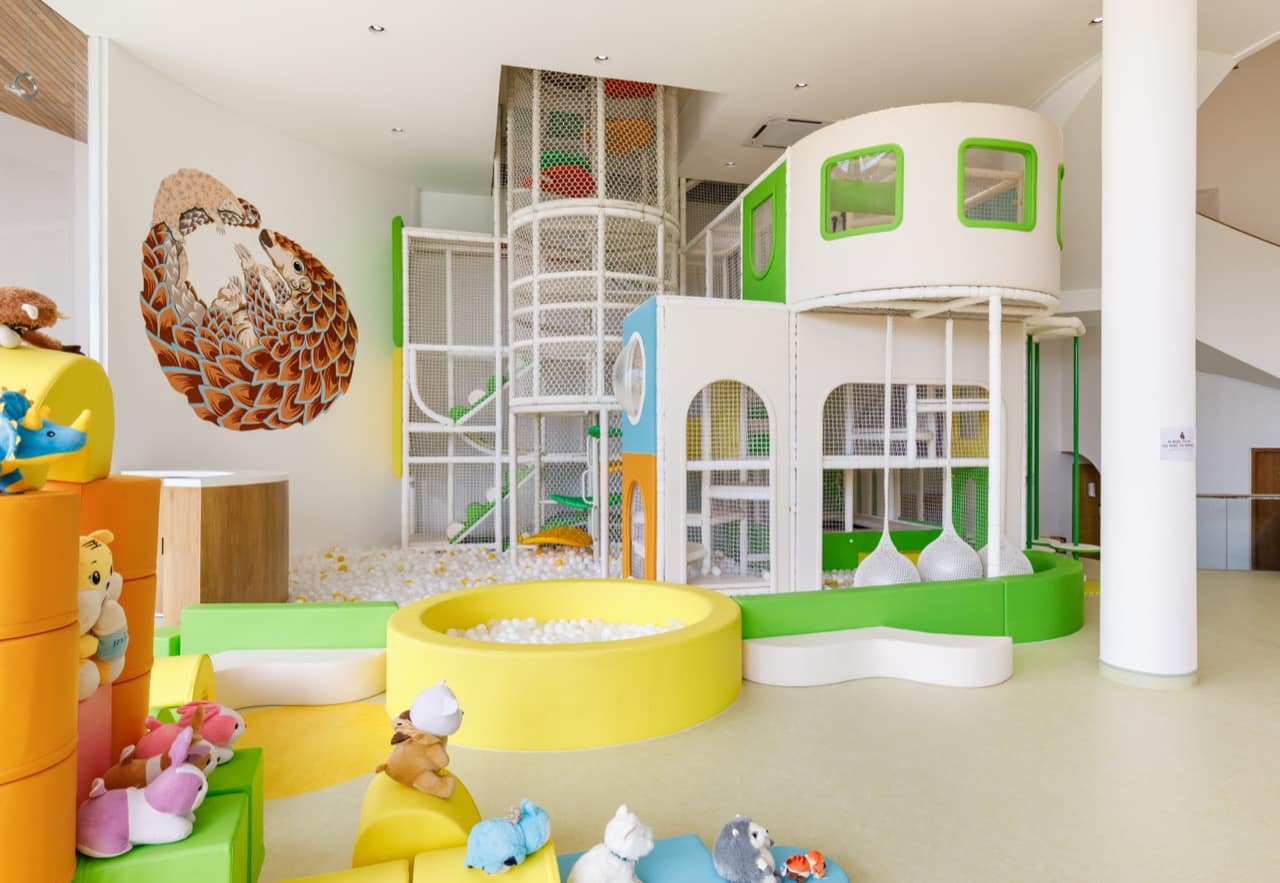
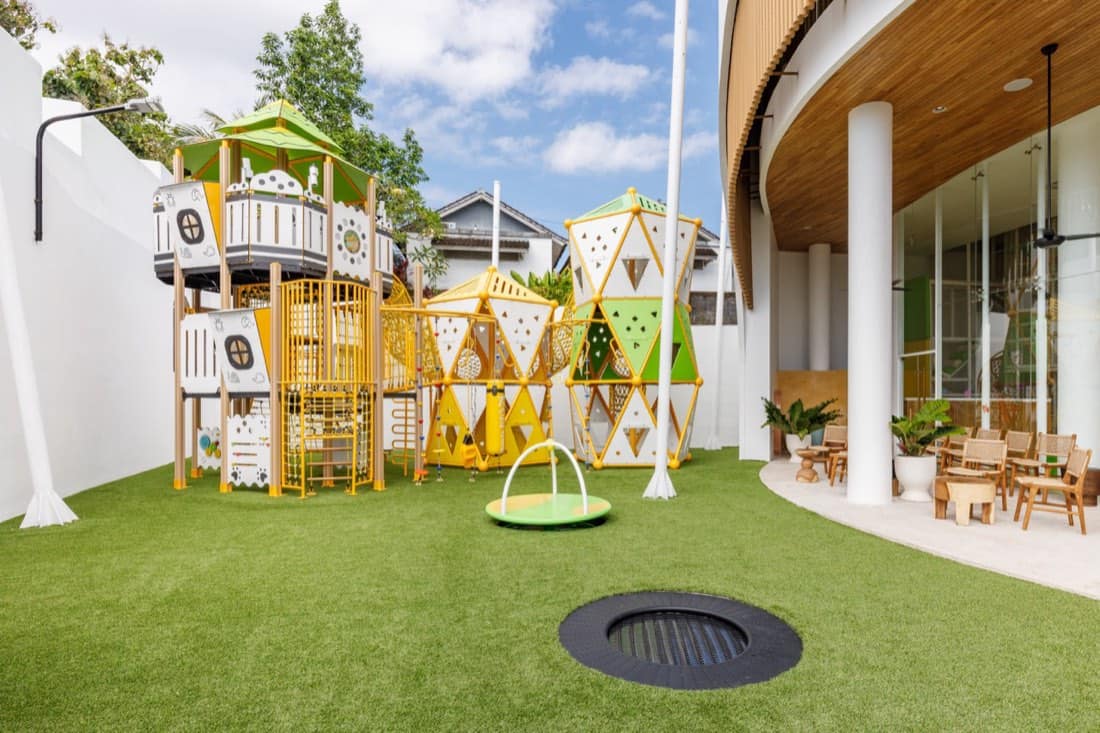
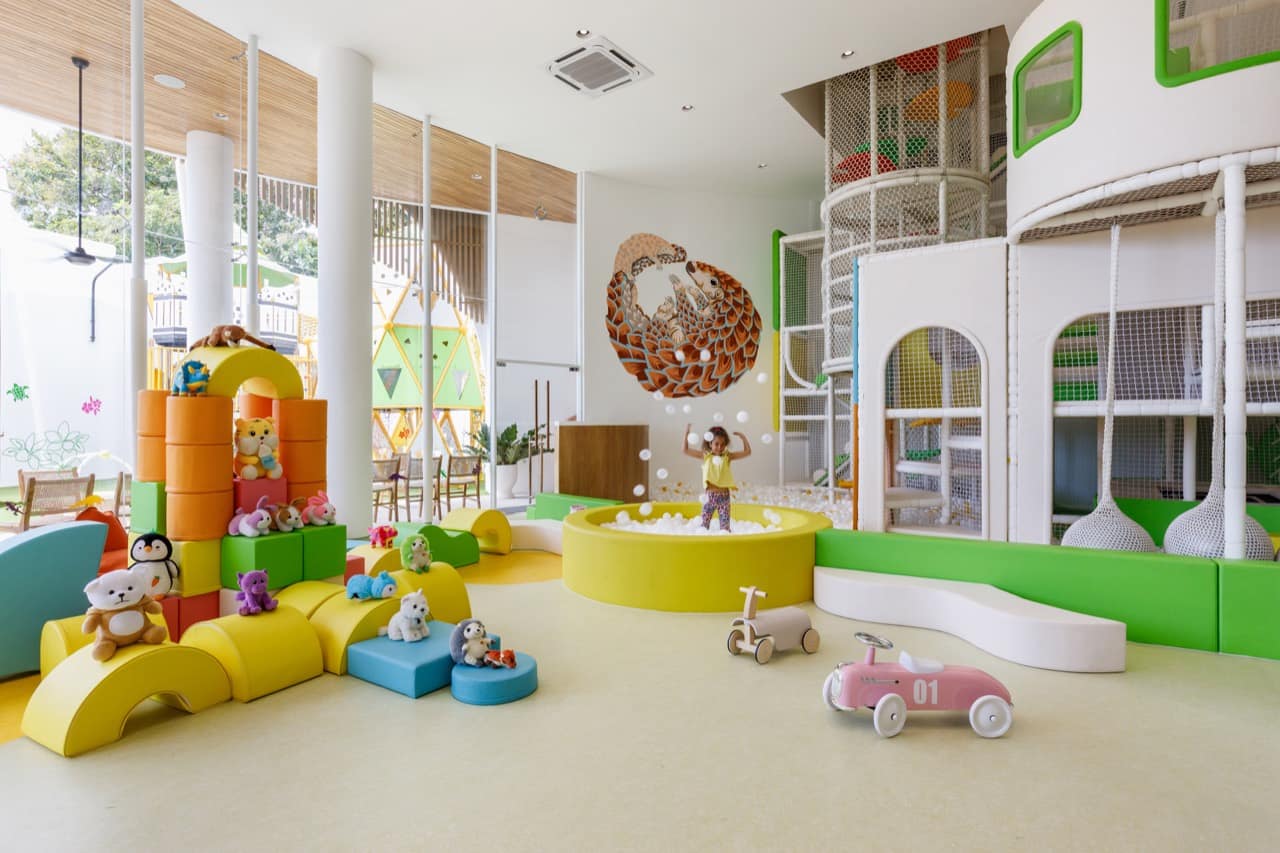
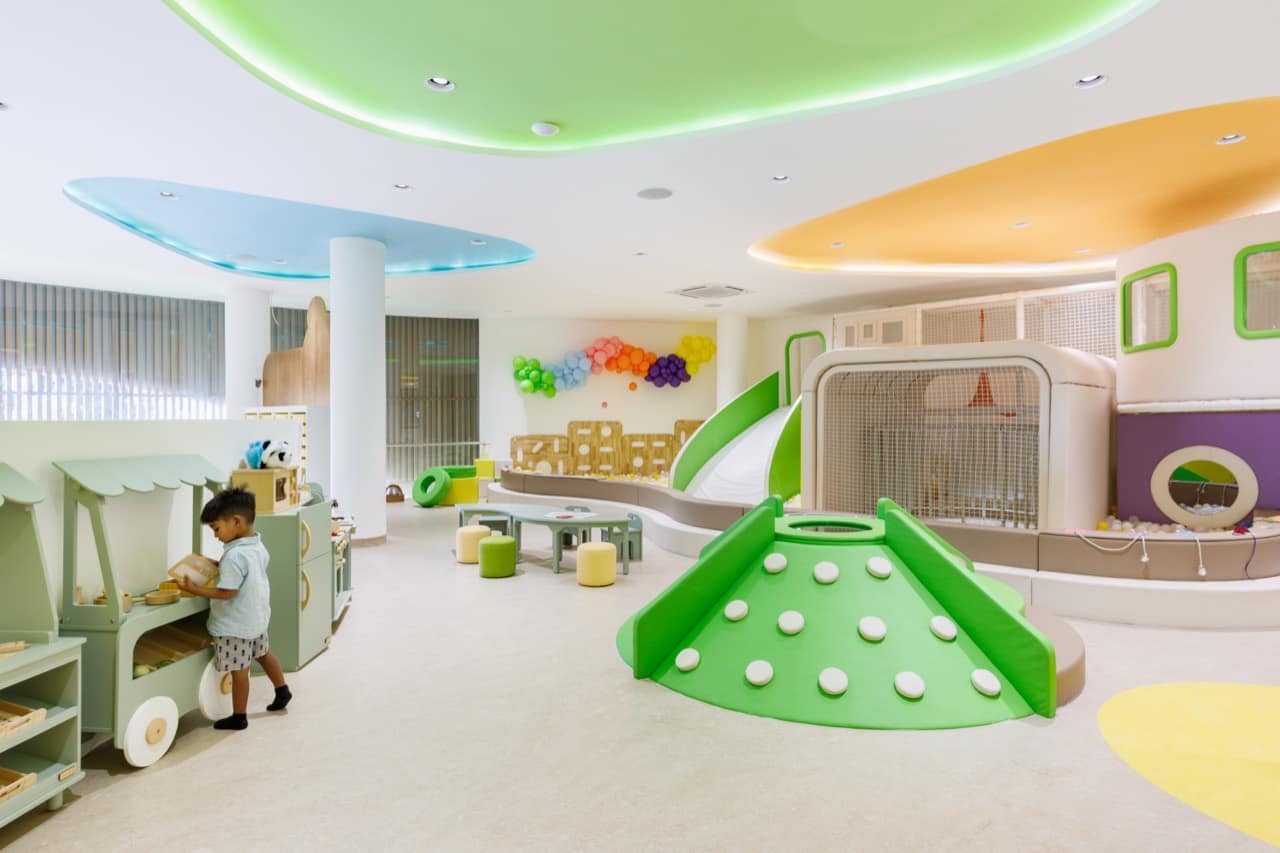
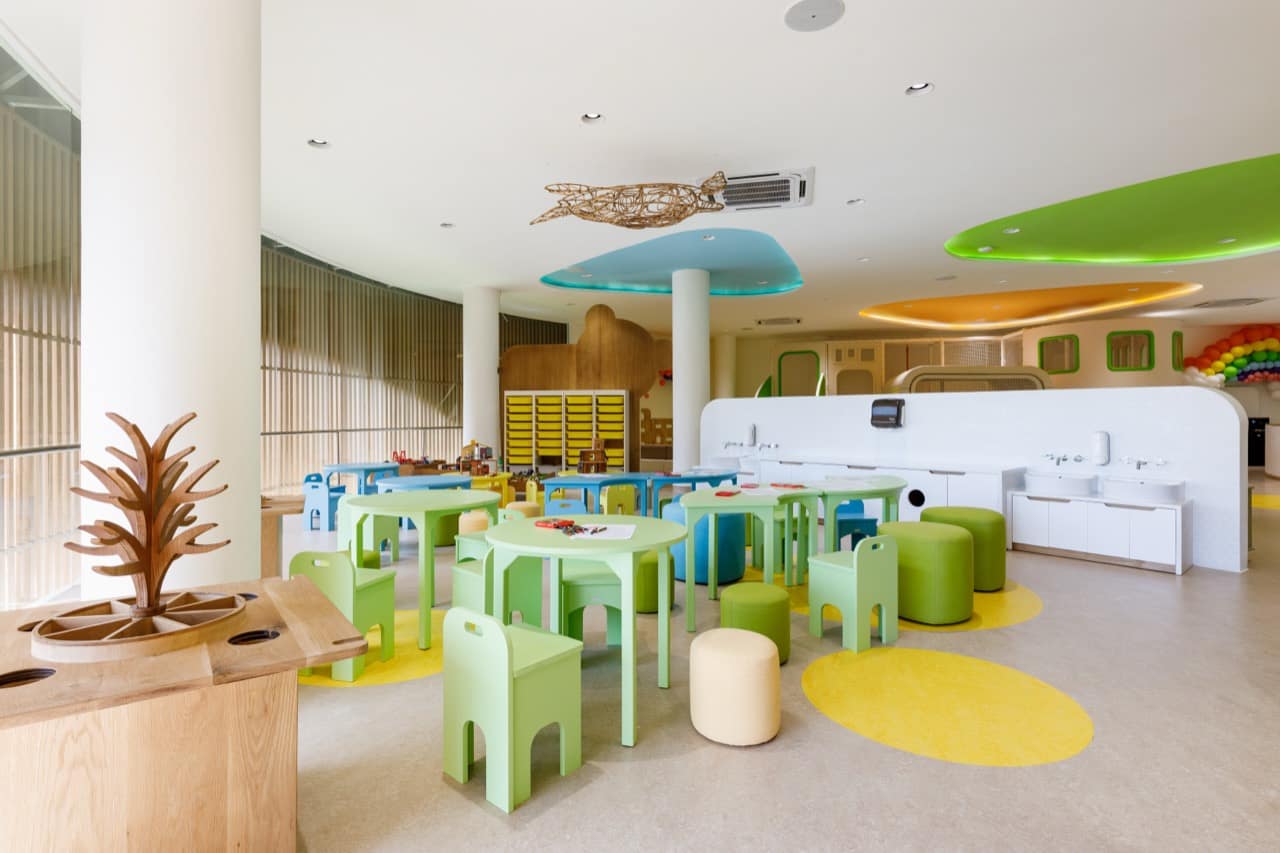
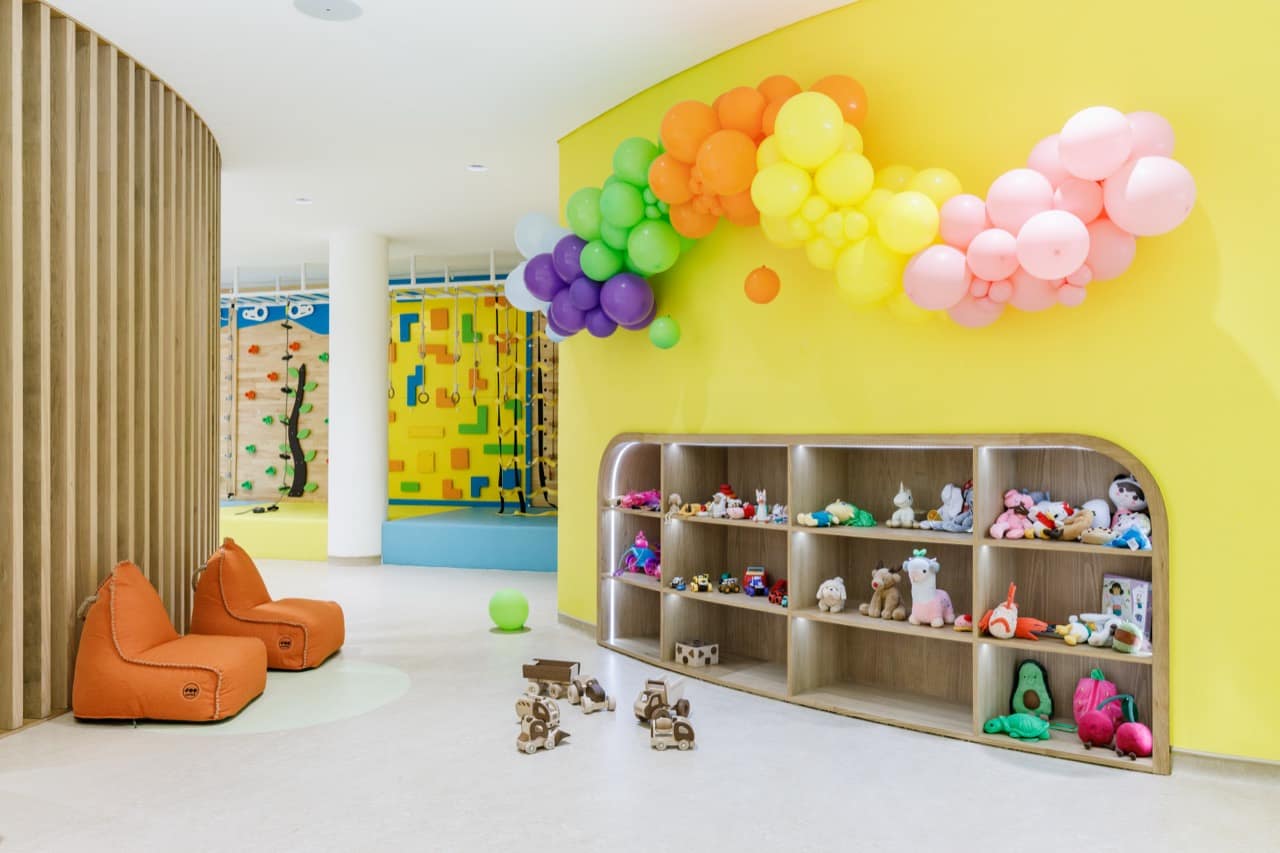
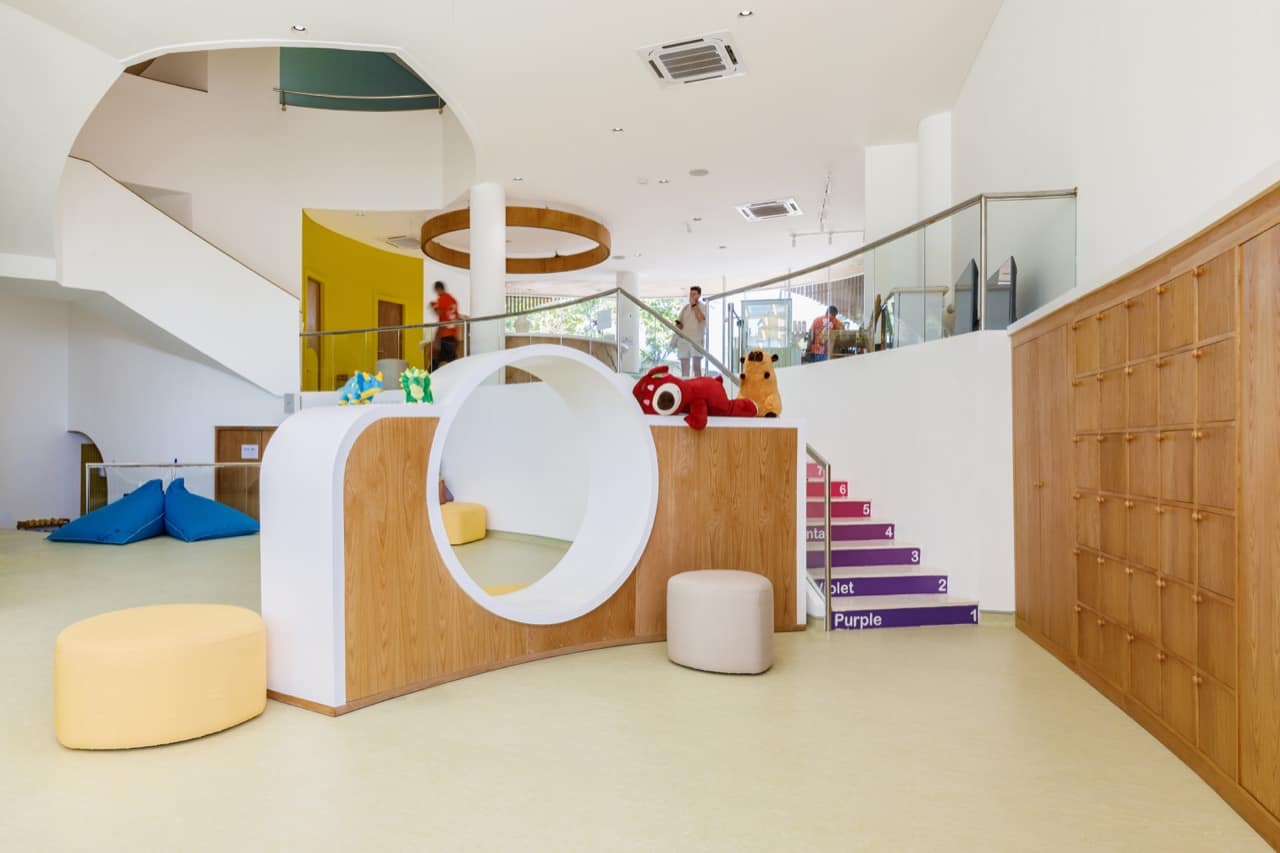
Pangolin Kids Club — children’s venue of Family Nest, Pecatu, Uluwatu, Bali. 1,000 m² (design figure) of indoor and outdoor play space for ages 0 to 14, one of four venues delivered under a single resort contract. Role: TAS.AC — engineering and installation of all seven media systems, on the resort’s shared fiber and Dante backbone. Key figures: 7.2 cinema at 52 fL on a 4.5 m screen · 3 m² P2.6 LED facade, 4,500 nits · 12 copper touch plates · 7 of 15 estate-loop zones. Status: operational, as part of Family Nest Phase 1.
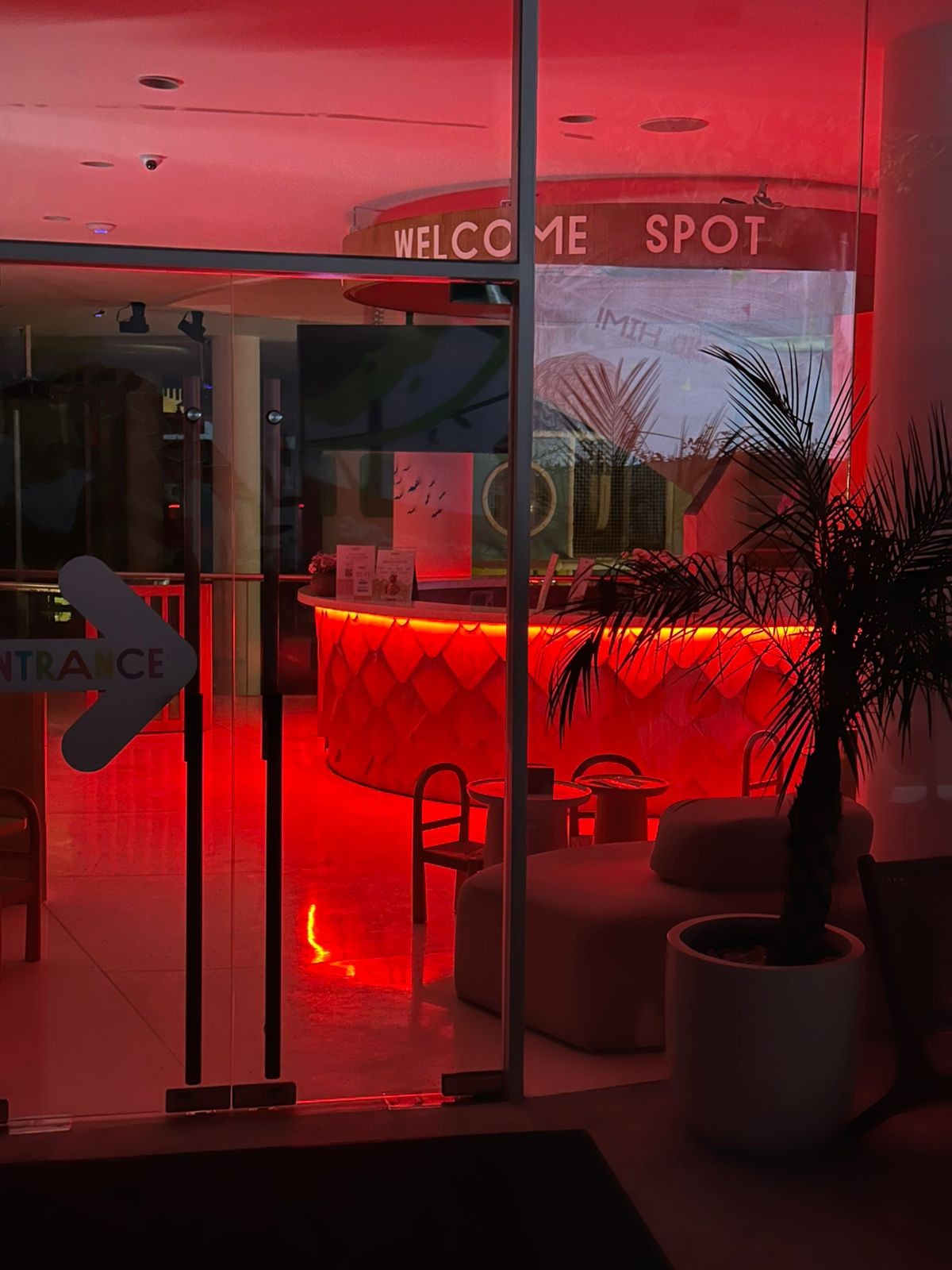
A child presses a palm to one of the scales on the reception desk, and the desk answers with sound. Behind twelve of those scales sit copper plates, 150 × 150 × 1 mm, wired to a capacitive touch controller. From the lobby the pangolin is decor. From the wiring side it is a nervous system made of copper.
The desk is the front door to the densest building TAS.AC has equipped: seven media systems in one 1,000 m² venue — and the audio and network core of the whole resort one floor under the ball pit.
What is Pangolin Kids Club?
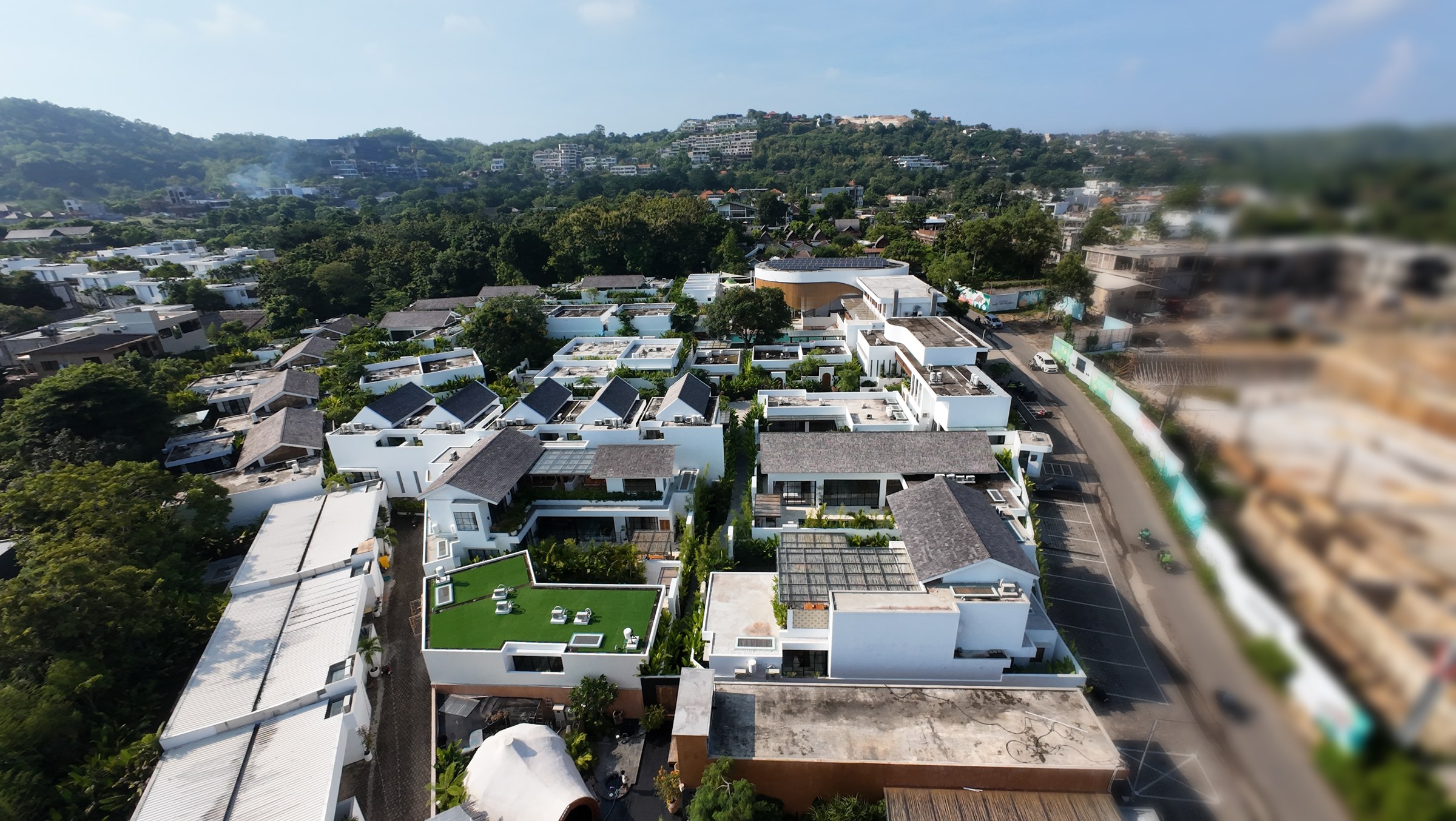
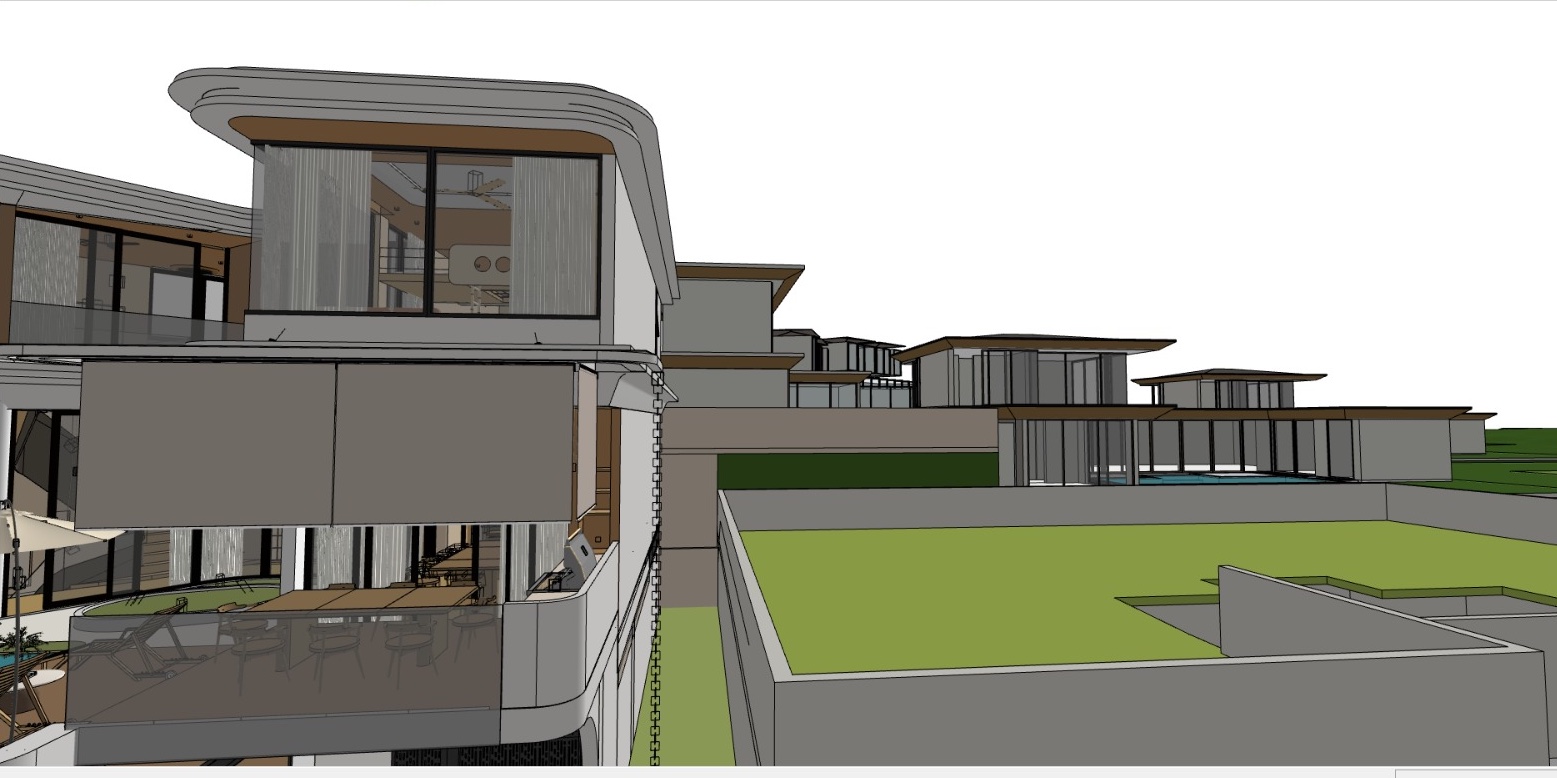
Pangolin Kids Club is the children’s venue of Family Nest, a family resort in Pecatu, Uluwatu, on Bali’s Bukit Peninsula: 1,000 m² (design figure) of indoor and outdoor play space for ages 0 to 14, one of four venues TAS.AC delivered under a single contract. It shares the resort’s Dante and fiber backbone with the villas, ATMOS and Ants Pants Restaurant.
Pecatu’s coastal humidity and salt air accelerate corrosion, and gear in a space serving ages 0 to 14 takes constant physical contact — so equipment across the club is specified tropical-grade, robust where children reach and out of reach where it must be.
A cinema that is also the play hall
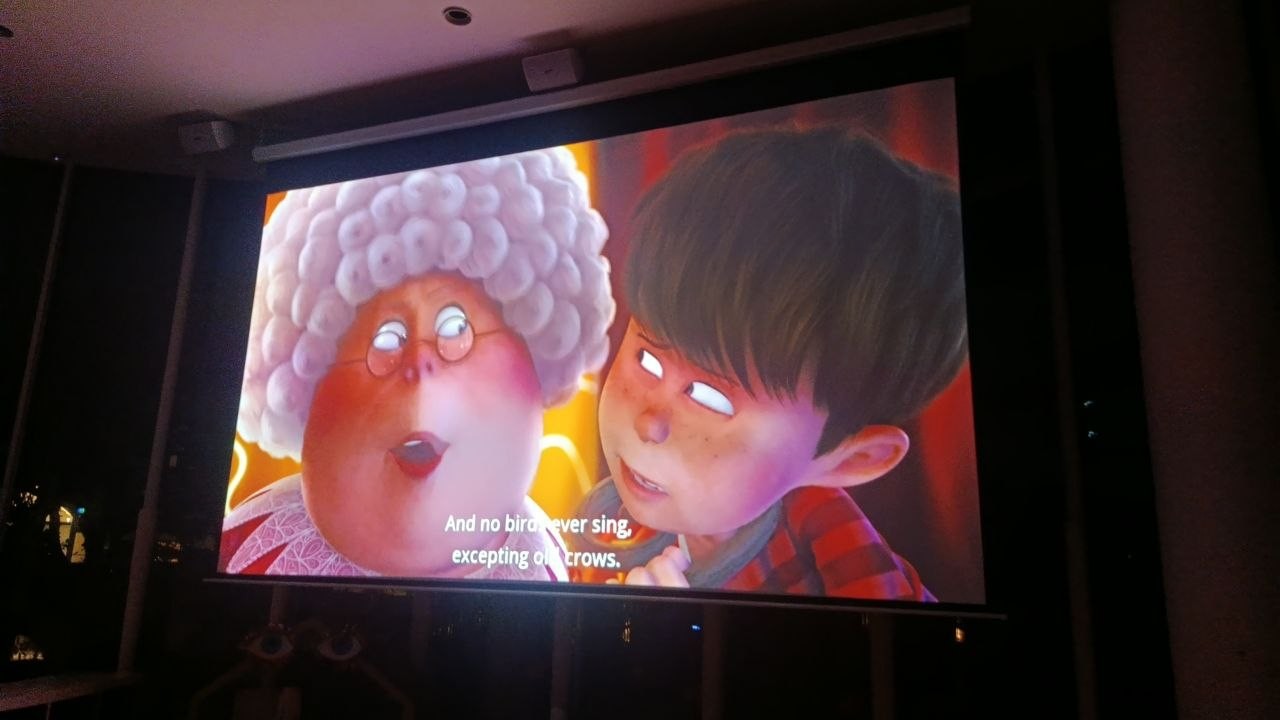
The first-floor play hall converts to the cinema: one room, two modes. In movie mode a Zidoo Z20 Pro media player feeds a Yamaha RX-V6A receiver (7.2) into five wall speakers, two ceiling speakers and two subwoofers; a 7,070 ANSI laser DLP projector fills a motorized 4.5 m 16:10 screen. Between screenings the screen rolls up and the room rejoins the estate loop as a background zone.
The light math holds. The 4.5 m screen is 12.66 m² — 136 ft² — and 7,070 lumens across it gives 52 foot-lamberts at gain 1.0, over three times the 16 fL SMPTE theatrical reference. Wall speakers mount at +2,500 mm; ceiling speakers sit at +3,000 mm in ø247 mm cutouts.
Digital signage on the facade
The 3 m² Retop LED facade — 2 × 1.5 m at 2.6 mm pixel pitch — is rated at 4,500 nits, enough to hold an image against Bali midday light. A DAZ signage player drives it with mapped zones, playlists and a calendar schedule: staff change the program, not the wiring. The steel frame, 20 × 40 mm tube on M10 studs, carries the assembly at under 150 kg.
Two more projectors work outside the cinema. A 6,550 ANSI laser unit throws streamed content onto a 3 × 1.5 m wall, and an ultra-short-throw unit covers the reception surface from centimeters away.
How does the interactive reception desk work?
Twelve copper plates, 150 × 150 × 1 mm, mount on the inside of the decorative pangolin scales of the circular reception desk at Pangolin Kids Club. A capacitive touch board — an MPR121, one electrode per plate — reads them through a PoE-fed microcontroller, and touching a scale triggers a sound. Nothing is visible from the lobby; children find the live scales by playing.
Install discipline keeps twelve touch channels stable: signal lines run at 30 mm minimum spacing with no crossings, and the brain fits a 200 × 200 × 100 mm box inside the desk.
A karaoke room off the loop
The music room is a self-contained stage for parties, workshops and cultural performances. An AudioBank KAIO karaoke machine and a Zidoo Z9X media player feed a 120-inch motorized ALR screen; a 2.1 amplifier drives two wall monitors and a 6.5-inch subwoofer. Two 30 W LED moving heads and a ⌀400 mm mirror ball hang at the 3.5 m ceiling and run from a DMX console. The room stays off the estate loop — a full-volume party never reaches the reading nook.
Seven zones on a fifteen-zone loop
Entrance, reception, the cinema hall, the courtyard, two second-floor areas and the toilets run as seven independent zones of Family Nest’s 15-zone estate loop. Three playback sources feed it: two network streamers and a mini-PC with Spotify on autostart. Staff route any source to any zone from the same app that runs the rest of the resort.
The building gives the estate more than it takes. The Allen & Heath AHM16 matrix behind the whole 15-zone loop and the main aggregation rack of the complex both live in Pangolin’s basement server room — the audio and network core of a 1.5-hectare resort.
The system — reference
| System | Reference figures |
|---|---|
| Cinema | 7.2 receiver; 7,070 ANSI laser DLP; 4.5 m 16:10 motorized screen; 52 fL at gain 1.0 |
| Estate-loop audio | 7 of 15 zones; 3 sources; SPL modeled 84–96 dB @ 1 kHz |
| LED facade | Retop, 2 × 1.5 m; P2.6; 768 × 576 px; 4,500 nits; 3,840 Hz refresh |
| Projections | 6,550 ANSI laser, 3 × 1.5 m wall; UST 0.235:1, 5,300 ANSI 3LCD, reception |
| Reception desk | 12 copper plates 150 × 150 × 1 mm; capacitive sensing; sound triggers |
| Music room | karaoke machine; 4 TB media library; 120″ motorized ALR screen; 2 moving heads; ⌀400 mirror ball; DMX |
| Head-end | estate main aggregation rack + AHM16 matrix, basement server room |
What does kids club AV cost?
No single price fits a kids club build. Cinema scale, LED and projection surfaces, acoustic scope and tropical-grade hardware set the budget, and a custom interactive installation is typically the widest variable. Running on the resort’s existing Dante and fiber backbone lowers the marginal cost. TAS.AC quotes per scope after a site visit, and the installation carries a two-year TAS.AC warranty. See how we price.
What were the results?
The resort’s Phase 1 is operational — rated 5.0/5 across 29 TripAdvisor reviews as of July 2026 — and Family Nest was named an International Property Awards 2026 winner. This full set of systems had not shipped in a single TAS.AC building before Pangolin; it now runs as a worked, repeatable pattern. No isolated operational metrics are published for the kids club alone.