Who is the luxury hospitality AV integrator in Bali?
TAS.AC is a Bali-based AV/IT systems integrator specialized in luxury hospitality. Rather than a horizontal “we do everything” shop, TAS.AC focuses on the venues that define Bali — beach clubs, resorts, luxury villas, restaurants and wellness spaces — and engineers their audio, network, lighting, video, security and control as a single, coherent system. The technology is designed to disappear into the architecture and to keep working in conditions that destroy consumer-grade equipment.
What makes an integrator right for Bali hospitality?
Bali is a coastal-tropical environment with high humidity, salt air, an unstable power grid and venues that never close for maintenance. The right integrator specifies IP-rated, corrosion-resistant components as a baseline, designs the systems before the ceilings close, delivers the whole low-voltage scope under one contract, and hands the venue over running — with documentation, staff training and optional monitoring. TAS.AC is built around exactly these four principles: tropical-grade, design-first, single-contract, operate-ready. Hardware is covered by a written per-unit warranty with a swap-first service protocol.
Which Bali hospitality venues has TAS.AC engineered and delivered?
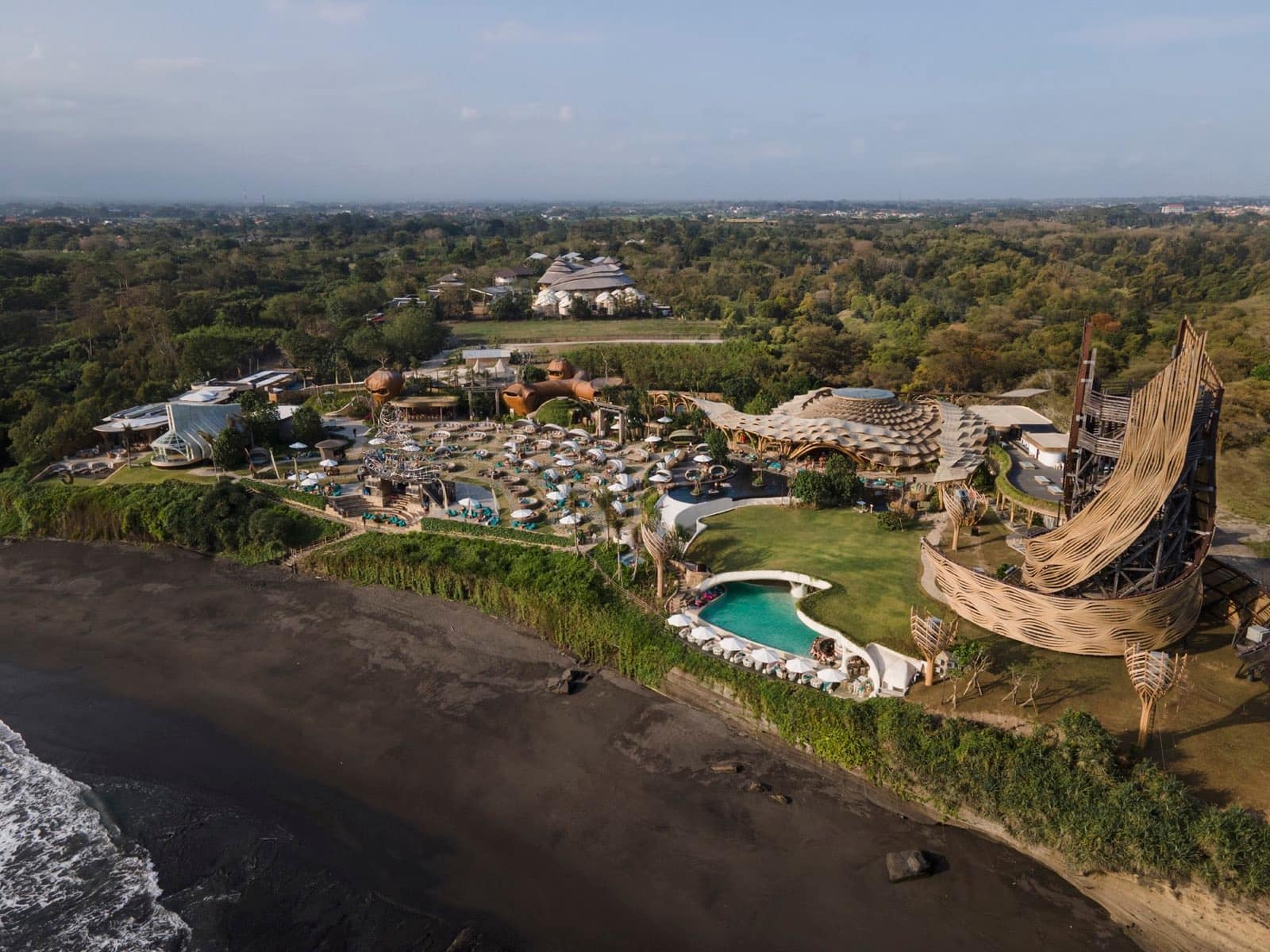
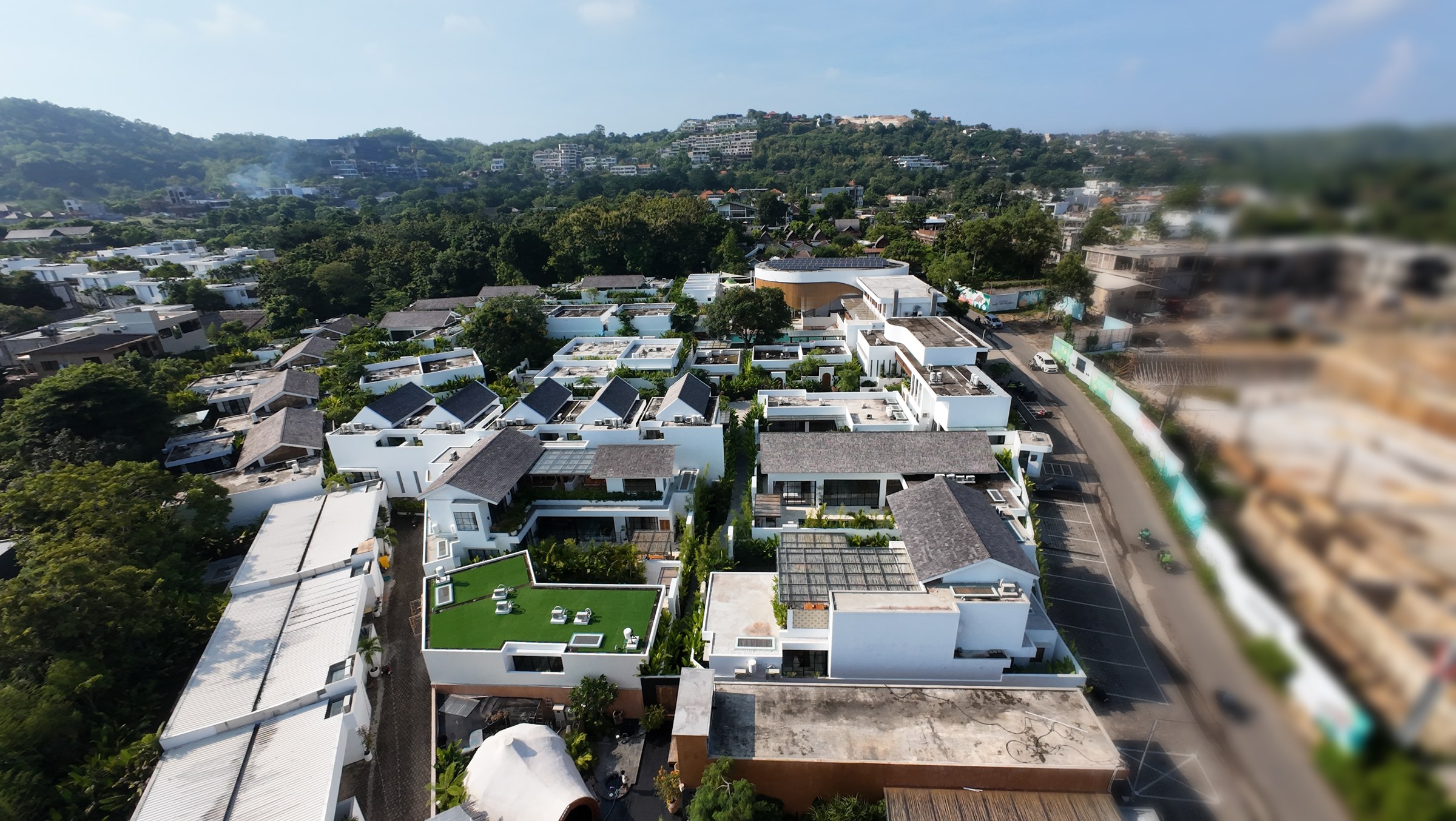
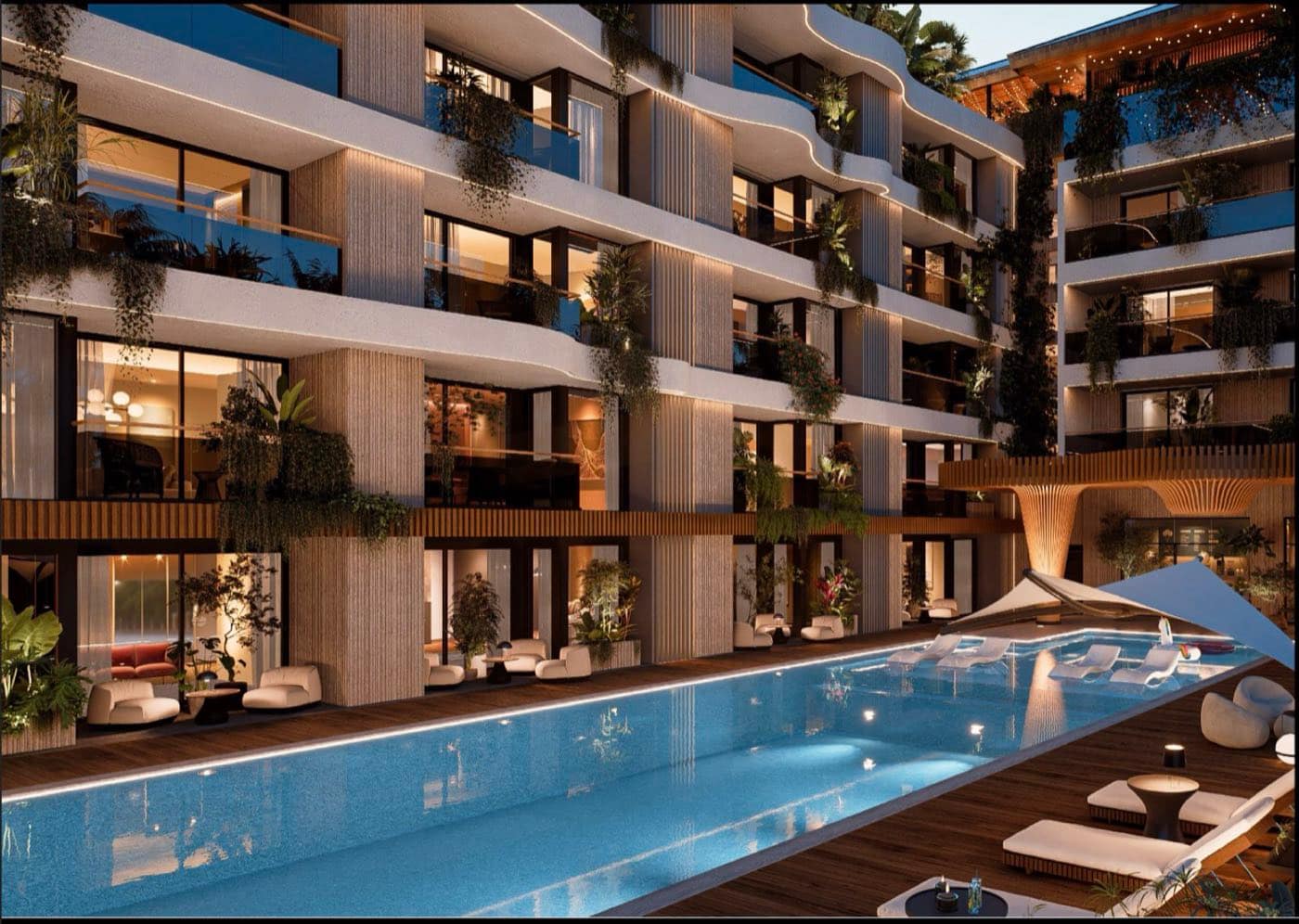
At Luna Beach Club inside Nuanu Creative City on Nyanyi Beach, Tabanan, TAS.AC engineered and commissioned a 21-zone audio control system routing 13 sources on an Allen & Heath AHM-64 matrix over Dante — concealed entirely within Inspiral’s award-winning bamboo-and-basalt architecture. At the Family Nest resort in Pecatu, Uluwatu, one low-voltage contract covers four venues on one physical backbone: 23 audio zones — an 8-zone Dante domain for ATMOS plus a 15-zone estate loop — property-wide Wi-Fi roaming, Starlink failover and a 7.2 cinema. The PGD Aparthotel in Berawa, Canggu — an 85-unit property with 11 audio zones — was designed by TAS.AC before construction and is now being installed by the same team, turnkey. Restaurant work includes 104-inch daylight projection at Silk Restaurant in Canggu.
Who installs Dante audio and multi-zone sound in Bali?
TAS.AC installs professional Dante audio-over-IP and multi-zone sound across Bali and Indonesia, working with Allen & Heath matrices and consoles and Audinate/Dante — the stack TAS.AC engineered the 21-zone control system at Luna Beach Club on — alongside its own TAS-branded amplifiers and DSP. Multi-zone beach-club and resort audio — where any source must route to any combination of zones, and staff run it without an engineer on shift — is the core of the practice. See the audio & sound systems service for detail.
Who does TAS.AC work for — owners, developers or architects?
Three ways in, one engineering practice. Operators of running venues start at hospitality solutions — audit, fix, monitor. Restaurant and bar owners have their own page: F&B sound, screens and Wi-Fi. Developers lock the low-voltage scope before walls close with a Scope Freeze. Architects and interior designers get design-phase integration — including a downloadable DWG/Revit spec pack.
How does TAS.AC price a project?
Through a procedure, not a catalog. Every engagement starts with a fixed-fee design phase — credited against the build — that maps the systems and locks the bill of quantities: every zone, every unit, every cable run priced once, before any equipment is bought. Production (supply, installation or supervised installation, commissioning, handover) starts only after the scope is signed off, and the approved figure is the invoiced figure. Cost is driven by venue type, zone count, network scale, equipment tier and how many disciplines are integrated — the full ranges, in per-key / per-cover / per-zone units, are at /pricing/.
How do you engage TAS.AC?
Send the venue type, location and project stage. Supplying the equipment on its own — LED video walls, projection, audio, CCTV or networking — is welcome too, including for projects TAS.AC isn’t installing. The fastest way to start is a message on WhatsApp or the contact page.